-02.png)
LATest e-bulletin May'26
Look at the endless innovative touring products developed by LAT. From slow tourism to tours aways from crowds, from an agile system of modular scheduled departures in different languages to arts, architecture, outdoor, experiential, culinary food and education packages, just to name a few!
All our offers are strictly carbon contribution @ LAT Climate Contribution, all emissions being calculated and offset by projects in cooperation with Climate Partners.
In this issue: ① Quote of the month ② A Human Choice ③ Run, Run Bali Run! ④ A flat language for All ⑤ Malaysia Jungle Tangle ⑥ LATest News ⑦ Singapore, the not so hidden soul of Lau Pa Sat ⑧ Bangkok’s canals go electric ⑨ Origin of fine arts in Indonesia ⑩ Thailand: The Price of Close Encounters
The imagination, like certain wild animals, will not breed in captivity.
George Orwell
A Human Choice
A journey, like an idea, a dream, a thought, ought to begin with a spark, a curiosity, a desire, a suggestion, an observation. Above all, it ought to begin long before departure. Perhaps even in the silence of maps and atlases slowly unfolding across a table, in reading that is not strictly necessary, but undertaken as a simple gesture of respect for the place one intends to go and what one expects to encounter there. In the quiet awareness that the world is far greater than our own habits and modest stores of knowledge.
One should perhaps travel first with the mind, and only afterwards with the body.
Despite these apparent commonplaces, more and more often we arrive elsewhere without ever truly having set out. We reach different destinations carrying within us images already assembled, stitched together from brief videos, borrowed opinions, filtered sunsets, expectations rehearsed in advance. The journey does not begin with curiosity, but with confirmation. Not with wonder, but with a familiarity disguised as discovery.
We arrive informed, yet unprepared. And so, we pass through places without ever truly entering them. A village becomes a viewpoint. A meal becomes an image. A ceremony becomes content. A community becomes a backdrop. Nothing offers resistance, because nothing is any longer permitted to speak in its own voice.
A journey is a precise request to suspend our certainties, our small habits that so reassuringly deceive us. To accept the discomfort and the privilege of difference. To loosen our grip on what we believe we have already understood. It requires the courage to be temporarily illiterate in another world. Today, far too often, we arrive even in the most remote places, physically and culturally speaking, only to speak intensely about ourselves.
We do not read before we depart. We do not listen when we arrive. We do not create within ourselves small interior maps that might tell us how we ought to behave, how we should adapt to difference rather than expecting difference to adapt to our expectations. And so, the encounter never truly happens.
Movement increases. Distances shrink. Experiences narrow. The world becomes closer, but not deeper.
For the communities that receive us, the change is perceptible. Everyday life bends quietly towards anticipation. Authentic gestures become performances repeated too many times. Hospitality becomes theatre. Culture becomes scenery.
A place slowly begins to resemble the image visitors expect to find.
And now another presence appears on the threshold of travel, and it is called artificial intelligence.
Soon it will choose itineraries before we even desire them. It will suggest restaurants before hunger arrives. It will anticipate wishes before curiosity is born. It will promise efficiency, coherence, certainty. It will reduce hesitation, eliminate error, smooth the unexpected edges of the unknown.
It will make travel easier. It will make our work much easier. But travel was never meant to be easy, just as none of the things that truly have substance are.
It is meant to transform.
And here a subtle danger lies hidden: that the very systems which guide us with greater precision may also protect us more carefully from surprise. That algorithms trained to recognise our preferences may end, silently, by preventing us from encountering what might challenge them.
If travel becomes perfectly tailored, it may also become perfectly closed, turning from a window into a mirror.
And yet the purpose of travel is not to recognise ourselves elsewhere. It is to encounter what we are not, to remain, if only for a moment, within another rhythm of life and allow something within us to be rearranged.
To prepare is not an obligation. It is a gesture of learning and of respect. Reading is not instruction, but openness. Curiosity is not optional; it is the journey itself.
Artificial intelligence will help us move through the world. But it cannot teach us how to truly arrive.
That remains a human responsibility, and perhaps today, more than ever, a human choice.

Run, Run Bali Run!
Bali is increasingly establishing itself as a key destination for sports tourism, complementing its well-known leisure image with a dynamic, ever-evolving offering that is increasingly oriented toward an active international audience. The year 2026 is set to be a strategic milestone, marked by a growing calendar of international sporting events capable of attracting a diverse and dynamic clientele.
Events such as the Sanur Bali International Half Marathon and the Maybank Bali Marathon have already demonstrated the strong potential of this segment, thanks to a formula that combines international participation, strong local community engagement, and territorial enhancement. In this context, sport goes beyond competition: it becomes an immersive experience that blends performance, culture, and lifestyle.
Further strengthening this positioning, Bali is preparing to host new large-scale events, including an international fun run with up to 20,000 participants through the spectacular Jatiluwih rice terraces, a UNESCO World Heritage site, as well as globally recognized events such as the Red Bull Cliff Diving World Series in Nusa Penida.
This trend reflects a continuously evolving demand: travellers are increasingly seeking destinations that combine physical activity, wellness, and discovery, without giving up the experiential dimension. Bali responds with an increasingly complete and structured offering: from jogging to surf, from yoga to trekking. All supported by growing infrastructure and a now well-established international positioning as a hub for active lifestyle tourism in Asia.

Malaysia Jungle Tangle
In Kuala Lumpur, fine dining is going off script. In a city once defined by imported luxury, chefs are turning to the rainforest, bringing wild, unfamiliar ingredients to the centre of the plate.
For years, the language of high-end cuisine here was unmistakably international, built on European truffles, Japanese strawberries, and other symbols of a standardized, global culinary code. Today, that language is giving way to something more untamed and distinctive, grounded in one of the richest ecosystems on Earth.
The rainforests of Malaysia, particularly those of Borneo, hold thousands of plant species, many of which have barely been explored in a fine dining context. It is from this biodiversity that chefs are beginning to shape a new culinary identity, bringing to the table ingredients once confined to home kitchens and indigenous communities.
Contemporary fine dining in Malaysia has begun to redefine its foundations, placing indigenous rainforest ingredients at the centre of its culinary identity. Menus increasingly feature bambangan, a wild mango from Borneo, kulim, a type of wild garlic, and dabai, often referred to as the Borneo olive, all reinterpreted through contemporary techniques and elevated into central elements of a new gastronomic narrative.
Around this vision, a broader creative ecosystem is taking shape. A growing number of restaurants are expanding the vocabulary of Malaysian cuisine, introducing ingredients like torch ginger, perah - a toxic seed that requires careful preparation - as well as local varieties of rice and cacao.
This is not just a cuisine of reinterpretation, but of rediscovery. Many of these ingredients had long been absent from urban fine dining, despite being deeply embedded in regional food traditions. Today, they are becoming tools to tell stories of place, culture, and biodiversity.
This shift reflects a broader repositioning. Malaysia is no longer defined solely by its urban skylines or beach destinations, but increasingly by the depth of its ecosystems and its ability to translate them into culinary experiences.
Yet this return to nature comes with complexity. Wild and foraged ingredients, often produced in small quantities, make supply chains less predictable, with strong seasonality, limited availability, and fragmented sourcing all challenging consistency.
And still, it is precisely within this tension, between exploration and constraint, that Malaysia’s new culinary identity is emerging. One that turns biodiversity into language and positions the country as one of the most distinctive voices in contemporary fine dining.
So Many Good Reasons to Work with LAT
Established in 1991. Independently owned and operated. Purely B2B with travel industry partners. Online booking engine with immediate confirmation of hotels, tours and transfers. Long experience in MICE industry. Knowledgeable and efficient reservations personnel. Fully committed to CSR. Direct access to a vast pool of local professional contributors. | Centralised bookings and payments for multi destination tours. 24/7 assistance in 4 different languages. Extensive selection of modular scheduled group departures in different languages. Owner of five boutique island hotels. Owner of one luxury Phinisi Yacht. Climate Contribution for all packages and services on offer. LAT app with updated itineraries and guest info (Apple and Play Stores). |
TATTLER
Singapore, the not so hidden soul of Lau Pa Sat
In the concrete jungle of Singapore’s Central Business District, among towering skyscrapers housing financial institutions, banks, luxury hotels, and restaurants of every level, a structure of timeless charm stands out. With its traditional architecture, Lau Pa Sat represents a cultural and gastronomic oasis in the heart of the city. During the week, it is bustling with office workers from nearby buildings, while in the evenings and on weekends it becomes a must-visit destination for travellers eager to discover the authenticity of local cuisine.
Lau Pa Sat is indeed one of Singapore’s most iconic hawker centres, a place where tradition and modernity coexist harmoniously. Here, among elegant Victorian cast-iron structures, visitors can enjoy an extraordinary variety of Chinese, Malay, and Indian dishes in a lively and convivial atmosphere that perfectly reflects the city’s multicultural spirit. In the evening, Lau Pa Sat expands to occupy one of the surrounding streets, which is temporarily closed to traffic. Numerous outdoor tables are set up, along with rows of grills where the famous satay is freshly prepared. The aroma of grilled meat, combined with the vibrant and informal setting, makes the experience even more atmospheric and engaging, turning the area into a true gathering spot under the city lights.
The history of Lau Pa Sat dates back to the 19th century, when it began as a fish market in the Telok The name “Lau Pa Sat” comes from a combination of Hokkien and Malay words, literally meaning “Old Market,” a direct reference to its origins.
Over the years, the structure has undergone several transformations. Rebuilt in 1894 with its iconic iron structure imported from Europe, the market was later dismantled and relocated in the 1980s during Singapore’s urban redevelopment. After careful restoration, it reopened as a hawker centre while preserving its historical character. Today, it is recognized as a national monument and continues to stand as a living symbol of Singapore’s history and culinary culture.
Lau Pa Sat is also an interesting venue for MICE activities, thanks to the possibility of reserving dedicated areas for groups of various sizes within the structure. This option allows participants to enjoy an authentic and immersive experience of Singapore’s local life, often far removed from the more formal and polished settings of Michelin-starred restaurants or bay-view hotels.
Hosting an event in this setting means offering a convivial and informal moment where food becomes the true protagonist, encouraging interaction among participants. The result is a dynamic and genuine experience, perfect for groups looking to connect directly with local culture, with a strong emphasis on the diversity of the gastronomic offer.

HIGHLIGHTS
Bangkok’s canals go electric
Bangkok has launched a new electric boat taxi service along its historic canals, marking a significant step towards cleaner and smarter urban mobility. The service, operating daily from 09.00 to 17.00 connects 14 piers across the city’s old town using a fleet of eight electric boats, each accommodating up to six passengers and bookable via MuvMi, a user-friendly app available in English. Following a free trial period ending in mid-April, fares will start at 35 baht (just over US$1), with tiered pricing based on passenger numbers and travel distance. The initiative aims to reduce congestion, pollution and noise, with electric propulsion cutting greenhouse gas emissions by up to 65% compared to diesel boats. Plans are already in place to expand the fleet, reinforcing Bangkok’s push towards sustainable, tourist-friendly transport.
Origin of fine arts in Indonesia
A newly dated cave painting on the island of Sulawesi is reshaping the timeline of human creativity, suggesting that symbolic expression may have emerged far earlier, and far from Europe, than previously thought. The red hand stencil, estimated to be at least 67,800 years old, features altered finger shapes that resemble claws, pointing to an early capacity for imagination and abstraction. The discovery challenges the long-held idea of a European “creative explosion”, reinforcing instead a more diffuse and ancient origin of artistic behaviour across regions inhabited by early Homo Sapiens. Beyond its archaeological significance, the find adds weight to theories that humans had already spread across Southeast Asia and towards Australia much earlier than conventional timelines suggest. As evidence accumulates, the narrative of human creativity is shifting, from a single point of origin to a far broader, more complex story.
Thailand: The Price of Close Encounters
The recent deaths of dozens of tigers at a tourist facility in Chiang Mai have reignited scrutiny over Thailand’s animal-based tourism model. While authorities point to disease outbreaks, animal welfare groups highlight structural issues such as chronic stress, confinement, and inbreeding linked to entertainment-driven wildlife attractions. The case exposes a long-standing tension between tourism demands and welfare standards in a sector that remains economically significant for the country. Beyond the immediate incident, the episode reflects a deeper contradiction at the heart of the industry: the commercialisation of “close encounters” with wildlife versus the ethical and biological limits of such practices. As global tourism gradually shifts toward higher welfare expectations, attractions built on direct animal interaction are increasingly questioned, raising a broader issue for Thailand about the long-term sustainability of this model.

Our whole product for free and independent travellers, groups and MICE is based on a Climate Contribution programme. This means that part of the greenhouse gas emissions that will be generated are offset by projects in collaboration with Climate Partner, one of the leading climate protection solution providers for companies.
The arising emissions are being compensated by supporting a third-party certified forest conservation project in Indonesia. This initiative plays a vital role in protecting the habitat of critically endangered orangutans, while also preserving biodiversity and maintaining important carbon sinks. By preventing deforestation and promoting sustainable land use, the project helps reduce CO₂ emissions and supports the long-term resilience of Indonesia’s ecosystems.

For over thirty years, Lotus Asia Tours Group has provided services and assistance to travellers the world over, specialising in the design and implementation of corporate events, activities, incentive tours and motivational travel, targeted at FIT, GIT and MICE markets, in Indonesia, Malaysia, Singapore, and Indochina. The group also operates five boutique island hotels in Indonesia, in Lombok, Bali, Sulawesi, Papua and Maluku, as well as a seven-cabin luxury sailing yacht.
To learn more about our brand please head to our website or contact us directly; we look forward to hearing how we could help make your next trip, tour or event memorable and successful.
Corporate Office
D-5-4 Megan Avenue 1, 189 Jalan Tun Razak, 50400 Kuala Lumpur, Malaysia
T: +60 (0)3 21617075 · E: latgroup@lotusasiatours.com
OUR HOTELS AND OUR LUXURY SAILING YACHT
Click here for more details about our resorts.
Click here for more details about our Phinisi vessel.
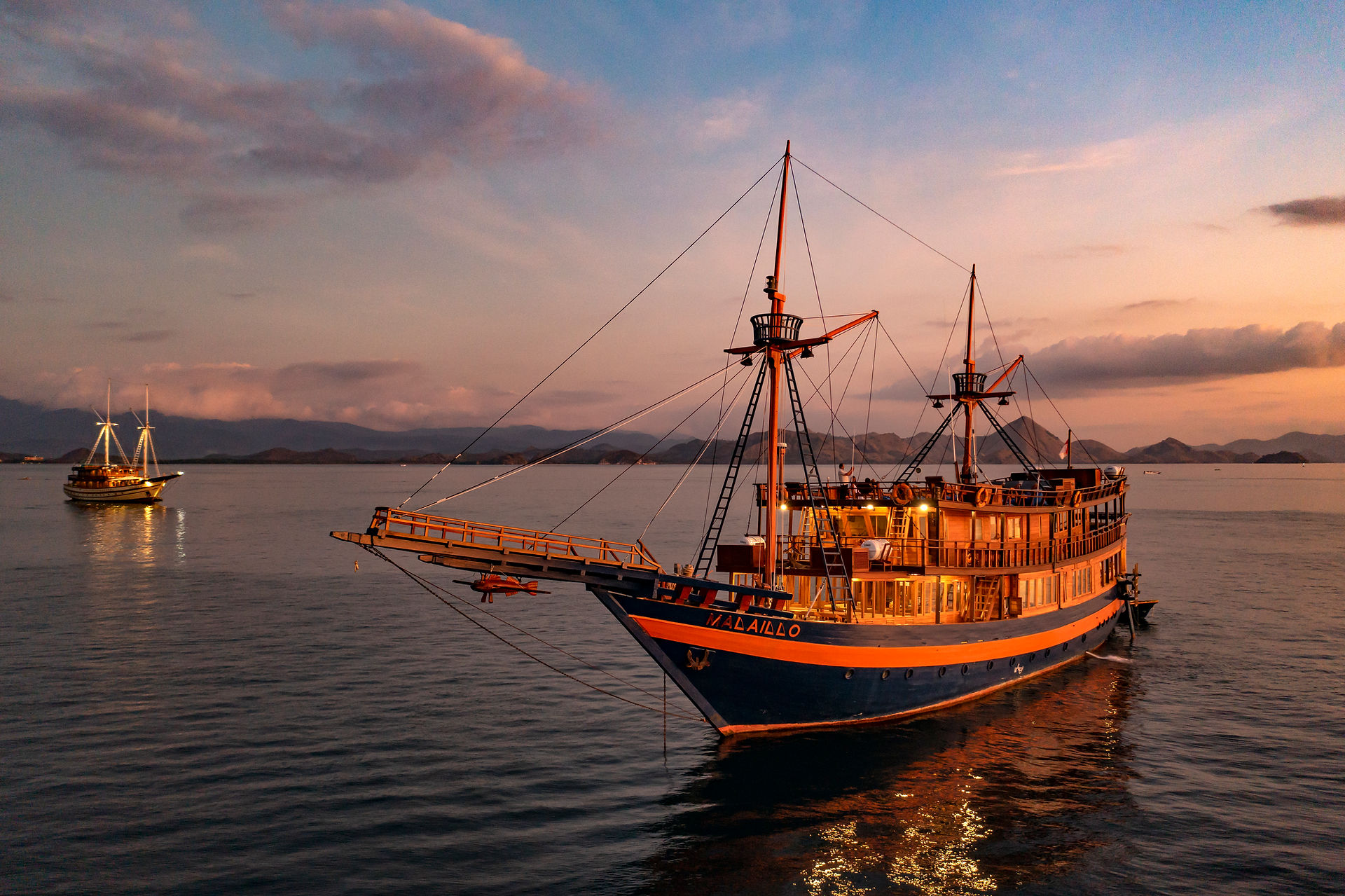
Malaillo Yacth 
Metita Resort 
Lotus Bungalow Villa Almarik Gangga Island Resort Papua Eco Paradise Resort


Comments