-02.png)
LATest e-bulletin June'26
Look at the endless innovative touring products developed by LAT. From slow tourism to tours aways from crowds, from an agile system of modular scheduled departures in different languages to arts, architecture, outdoor, experiential, culinary food and education packages, just to name a few!
All our offers are strictly carbon contribution @ LAT Climate Contribution, all emissions being calculated and offset by projects in cooperation with Climate Partners.
In this issue: ① Quote of the Month ② The Illusion of Superintelligence ③ Solitude for Sale ④ From Words to the World ⑤ Thailand, from Volume to Value ⑥ LATest News ⑦ The Durian Economy ⑧ Indonesia, Quality and Diversification ⑨ Malaysia, Hilton Burau Bay ⑩Singapore, MICE and Sustainability ⑪ Thailand, New Power Bank Rules
We cannot create what we can’t imagine.
Lucille Clifton
The Illusion of Superintelligence
For much of modern history, technological progress has been associated with liberation. Machines extended physical strength, computers amplified cognitive capacity and digital networks dissolved distances that once seemed insurmountable. Yet as technology advances deeper into the structure of human existence, a more unsettling possibility emerges: the gradual displacement not merely of human labour, but of human centrality itself.
Artificial intelligence represents the culmination of this trajectory. It is no longer conceived simply as an instrument designed to execute tasks, but increasingly as an autonomous force capable of shaping decisions, interpreting reality and mediating relationships between individuals and the world around them. In many circles, technological development is no longer discussed in pragmatic terms alone. It is surrounded by a language of inevitability, transcendence and salvation. The machine is imagined not only as an assistant to humanity, but as its successor, its guide or even its redeemer.
Such visions reveal a profound transformation in contemporary culture. Humanity has always searched for structures capable of providing meaning, certainty and orientation. Traditionally, these functions belonged to philosophy, religion, political thought and communal life. Increasingly, however, technological systems are occupying this symbolic space. Algorithms recommend what to read, what to desire, what to believe and even how to interpret emotional experience. Artificial intelligence begins to resemble not merely a tool of civilization, but a framework through which civilization understands itself.
The danger lies not in intelligence produced by machines, but in the concentration of power surrounding its development. Every technological system reflects the assumptions, interests and priorities of those who design and control it. No artificial intelligence emerges in a vacuum. Embedded within every model are invisible choices concerning values, acceptable behaviour, social norms and economic priorities. When these systems become integrated into daily life at a planetary scale, the moral vision of a small minority risks becoming the silent architecture governing society itself.
Efficiency alone cannot serve as the foundation of civilization. Systems optimized exclusively for speed, prediction and control inevitably flatten the complexity of human existence. Human beings are not reducible to data patterns, behavioural forecasts or measurable outputs. Conscience, ambiguity, suffering, compassion, contradiction and transcendence resist complete quantification. A society that forgets this distinction may become technologically advanced while simultaneously impoverished in moral and spiritual terms.
The growing cultural fascination with artificial intelligence also reveals a deeper exhaustion within contemporary society. Faced with uncertainty, fragmentation and institutional decline, many seek stability in systems that appear rational, omnipresent and incorruptible. The promise of a superhuman intelligence capable of resolving complexity exerts an understandable attraction. Yet the longing to surrender human responsibility to technological authority contains its own form of danger. A civilization that increasingly delegates judgment to machines risks weakening the very capacities that sustain freedom: critical thought, moral deliberation and personal accountability.
The essential challenge of the coming era is therefore not whether artificial intelligence will become more powerful. That process is already underway. The real question is whether humanity will retain the capacity to subordinate technological power to human wisdom rather than reorganize itself around the imperatives of technological systems.
Technology may expand human possibility, but it cannot determine human purpose. The preservation of human dignity requires resisting the temptation to treat intelligence alone as the highest value. Knowledge without wisdom, power without restraint and efficiency without moral orientation have historically produced not liberation, but new forms of domination.
The future will likely not be defined by a conflict between humanity and machines, but by a conflict between different visions of humanity itself: one that sees human beings as imperfect but morally irreducible, and another that increasingly views them as transitional entities awaiting optimization, replacement or transcendence.

Solitude for Sale
Raja Ampat is often presented as one of the last truly pristine marine environments on Earth, but its defining characteristic is not only ecological richness, it is accessibility. Reaching the archipelago requires multiple flights, long ferry crossings, and extended overland and sea journeys through remote parts of eastern Indonesia. This difficulty is not incidental to the experience, but structurally embedded in it, shaping the type of tourism the destination receives and effectively filtering it toward a small segment of highly committed travellers.
In this sense, remoteness functions as an informal form of preservation. The effort required to arrive limits volume, reduces pressure, and maintains a sense of exclusivity that has become central to how the destination is perceived and marketed. Yet this dynamic is inherently unstable. As global tourism systems expand and connectivity improves, isolation becomes less of a geographical condition and more of a temporary state.
The paradox is that what protects Raja Ampat also defines its value. Its appeal is inseparable from the fact that it is difficult to reach, fragile, and still relatively untouched by mass tourism flows. However, history across Southeast Asia suggests that once a destination enters global visibility circuits, distance alone is no longer a sufficient barrier.
What emerges is a wider structural tension in contemporary tourism. Preservation is increasingly dependent not only on regulation or conservation policy, but on friction itself: time, cost, and complexity of access. In a system where beauty becomes globally shareable, isolation is no longer a permanent condition but a temporary advantage.

From Words to the World
On 22 May, I had the pleasure of meeting with students from the Faculty of Languages and Linguistics at Universiti Malaya, particularly those from the Spanish and Italian departments. This meeting was the result of the strong collaboration that has developed between LAT and UM, one of Malaysia’s most prestigious universities.
The purpose of the meeting was twofold. On the one hand, we wanted to create opportunities for young students who are learning languages that are fundamental to our work to apply for internships and practical training placements. On the other hand, we wanted to provide a broader perspective on the opportunities that the tourism industry can offer to those who speak Italian and Spanish.
At first glance, the most obvious need is for tour guides who speak Romance languages, especially given that demand far exceeds supply. However, language proficiency is, in itself, a valuable professional asset that can open many doors within the tourism industry, far beyond a career as a tour guide.
In Malaysia, the tourism sector supported one out of every nine jobs in 2025 and contributed approximately 11% of the country's GDP. For young students looking for direction in their future careers, tourism offers a wealth of opportunities. When combined with a valuable skill such as proficiency in a niche language like Italian, or a widely spoken language such as Spanish, an entire range of career possibilities emerges, many of which may not be immediately apparent to younger generations.
Moreover, the very decision of a Malaysian student to dedicate themselves to studying Spanish or Italian is already a story worth telling in a professional context. The motivation behind choosing to learn these languages creates an aura of authenticity around the individual, even before the technical skills they will go on to develop.
This is also why, rather than focusing solely on the historical and cultural explanations of our destinations, guests often ask our guides how they learned the language. Motivation is, in itself, a story, and stories create authenticity. Furthermore, a university education provides the opportunity to develop a strong analytical and cognitive framework that can be successfully applied to many aspects of our industry. So, let us warmly welcome young university students who are eager to enter the world of tourism!
This collaboration model between LAT and the most prestigious universities in the destinations where we operate develops alongside our ongoing commitment to technological innovation and the advancement of artificial intelligence. We firmly believe that investing in future generations and contributing to the development of unique and essential skills for our industry is a winning strategy to further strengthen our position as the leading DMC for Latin markets.
Gabriele Di Terlizzi

Thailand, From Volume to Value
Thailand’s decision to reduce its visa-free stay from 60 to 30 days may appear, at first glance, as a technical adjustment linked to immigration control. Officially, the government cites concerns over illegal employment, criminal networks, and the misuse of tourist visas. Yet behind the policy shift lies a tension that extends far beyond Thailand itself: the growing difficulty of defining what a “tourist” actually is.
For years, Thailand has positioned itself as one of the world’s most accessible tourism economies. Visa exemptions were expanded after the pandemic, long-stay schemes multiplied, and the country increasingly marketed itself not only as a holiday destination, but as a place where foreigners could temporarily live, work remotely, consume, and remain for extended periods. This openness was not accidental. In a country heavily dependent on tourism, the continuous flow of internationally mobile people gradually became part of the economic model itself.
The problem is that contemporary mobility no longer fits neatly into traditional categories. The classic image of tourism, temporary travel separated from ordinary life, has gradually blurred. Across Southeast Asia, increasing numbers of visitors move through destinations in more ambiguous ways: working remotely from cafés, staying for months on tourist visas, combining leisure with freelance work, or treating tourism infrastructure as a semi-permanent lifestyle environment rather than a short-term experience.
In this context, the distinction between tourist, temporary resident, remote worker, and informal migrant becomes increasingly difficult to enforce. The issue for governments is not simply the number of arrivals, but the growing complexity of the mobility itself. Thailand’s visa reduction therefore reflects less a rejection of tourism than an attempt to regain administrative clarity over forms of movement that have become structurally hybrid.
This contradiction is particularly visible in Southeast Asia. Countries across the region actively seek international spending, foreign consumption, and globally mobile lifestyles, while simultaneously trying to contain the informal economies and regulatory grey zones that often emerge around them. Openness, in other words, is becoming increasingly selective.
Seen from this perspective, Thailand’s visa policy is not simply about border control. It reflects a deeper transition taking place within global tourism itself. Travel is no longer defined only by temporary escape or leisure consumption. Increasingly, it functions as a fluid space between lifestyle, labour, mobility, and residence.
The real question, therefore, is no longer how many tourists countries can attract, but how states adapt to a world in which tourism itself is evolving into something far less temporary and far more structurally embedded in everyday life.
So Many Good Reasons to Work with LAT
Established in 1991. Independently owned and operated. Purely B2B with travel industry partners. Online booking engine with immediate confirmation of hotels, tours and transfers. Long experience in MICE industry. Knowledgeable and efficient reservations personnel. Fully committed to CSR. Direct access to a vast pool of local professional contributors. | Centralised bookings and payments for multi destination tours. 24/7 assistance in 4 different languages. Extensive selection of modular scheduled group departures in different languages. Owner of five boutique island hotels. Owner of one luxury Phinisi Yacht. Climate Contribution for all packages and services on offer. LAT app with updated itineraries and guest info (Apple and Play Stores). |
TATTLER
The Durian Economy
In many airports across Southeast Asia, signs still ask passengers not to bring durian onboard. The illustrations are often unintentionally funny: a large spiky fruit surrounded by warning symbols, treated almost like a dangerous object.
And yet, in the same region, premium durians are now sold inside luxury shopping malls, displayed in elegant boxes and discussed with the seriousness normally reserved for wine.
Something has clearly changed.
For decades, durian belonged mostly to ordinary life. It was eaten in roadside stalls, local markets and family gardens. Its smell travelled through entire neighbourhoods before the fruit itself appeared. In many parts of Southeast Asia, durian was never neutral. People either loved it or avoided it completely.
Today, however, durian is becoming something else: a cultural product, a status symbol, an experience.
In Thailand and Malaysia, some varieties now reach surprisingly high prices. Durian season attracts tourists and consumers willing to queue for limited quantities of premium fruit. In some cities, specialised buffets allow guests to taste different varieties almost the way people attend wine tastings. The fruit itself has not changed very much. The economy around it has.
Part of what makes durian interesting is that it does not follow the logic of most global consumer products. It is not designed to be universally pleasant. Its smell is aggressive. Its texture can be unsettling. Many first-time visitors react with visible confusion. And yet this difficulty is part of its appeal.
To appreciate durian often requires familiarity and acquired taste. Unlike many products, it seems entirely comfortable being misunderstood.
Durian also reflects a broader transformation taking place across Southeast Asia. Products that once belonged to ordinary local life are increasingly being repositioned as premium cultural experiences. Coffee, traditional desserts, local fabrics and street food are slowly entering a new economy built around identity, storytelling and consumption.
Tourism plays a role in this process, but it is not the only force behind it. Much of the demand now comes from within Asia itself. Regional middle classes are consuming their own culture differently: more consciously, more visually and often more expensively. In this sense, durian has become more than a fruit.
Knowing the right variety, recognising where it comes from, understanding when it is perfectly ripe, these things increasingly carry social value. Taste itself becomes a way of signalling belonging.
There is also something slightly ironic in all this. Durian remains stubbornly inconvenient. Hotels still ban it from rooms. Taxis sometimes refuse passengers carrying it. Its smell still fills elevators and corridors with remarkable efficiency. But perhaps that is exactly why it continues to matter.

HIGHLIGHTS
Indonesia, Quality and Diversification
Indonesia remains on track to welcome 17.6 million international visitors, with policy focus shifting from volume to quality. In Bali, authorities have strengthened oversight of foreign tourists by reviewing length of stay, planned activities, and financial capacity to encourage responsible, higher-value travel. Simultaneously, the Ministry of Tourism is directing investment away from overcrowded destinations such as Canggu, Seminyak, and Ubud toward priority tourism areas and regenerative eco-tourism projects, including Labuan Bajo. Sustainability efforts are also being integrated into local economies through certification programs in rural tourism villages, while enforcement actions have intensified against illegal activities that threaten the country's environmental and cultural heritage.
Malaysia, Hilton Burau Bay
The newly opened Hilton Burau Bay Resort Langkawi marks a significant addition to Langkawi’s hospitality landscape. Located along the pristine shores of Pantai Kok, the beachfront resort offers 251 rooms and enhances the island’s appeal for both leisure travellers and incentive groups, further strengthening Langkawi’s position as one of Malaysia’s leading resort destinations.
Singapore, MICE and Sustainability
Singapore expects 17–18 million visitor arrivals, supported by its resilient MICE sector. However, the Singapore Tourism Board (STB) forecasts softer tourism receipts as geopolitical tensions and rising fuel costs increase travel expenses and moderate corporate and luxury spending. At the same time, Singapore is reinforcing its position as a leader in sustainable tourism by hosting international forums on heritage preservation and responsible travel. Through its Tourism Sustainability Programme, the STB is also upgrading workforce capabilities in areas such as carbon management, sustainable procurement, and climate resilience.
Thailand, New Power Bank Rules
Thailand’s Civil Aviation Authority has introduced stricter rules on carrying power banks, including capacity limits and a ban on placing them in checked baggage. The measures align with international aviation safety standards and are already enforced by many airlines, including Thai Airways International.
The regulations follow a series of safety incidents involving lithium battery devices, including a fire aboard an Air Busan aircraft in January 2025, where a power bank was identified as a possible cause. In Thailand, a Bangkok Airways flight from Samui to Hong Kong was diverted in July 2025 after a power bank caught fire, while a similar incident occurred on a Thai AirAsia flight in January 2024.

Our whole product for free and independent travellers, groups and MICE is based on a Climate Contribution programme. This means that part of the greenhouse gas emissions that will be generated are offset by projects in collaboration with Climate Partner, one of the leading climate protection solution providers for companies.
The arising emissions are being compensated by supporting a third-party certified forest conservation project in Indonesia. This initiative plays a vital role in protecting the habitat of critically endangered orangutans, while also preserving biodiversity and maintaining important carbon sinks. By preventing deforestation and promoting sustainable land use, the project helps reduce CO₂ emissions and supports the long-term resilience of Indonesia’s ecosystems.

For over thirty years, Lotus Asia Tours Group has provided services and assistance to travellers the world over, specialising in the design and implementation of corporate events, activities, incentive tours and motivational travel, targeted at FIT, GIT and MICE markets, in Indonesia, Malaysia, Singapore, and Indochina. The group also operates five boutique island hotels in Indonesia, in Lombok, Bali, Sulawesi, Papua and Maluku, as well as a seven-cabin luxury sailing yacht.
To learn more about our brand please head to our website or contact us directly; we look forward to hearing how we could help make your next trip, tour or event memorable and successful.
Corporate Office
D-5-4 Megan Avenue 1, 189 Jalan Tun Razak, 50400 Kuala Lumpur, Malaysia
T: +60 (0)3 21617075 · E: latgroup@lotusasiatours.com
OUR HOTELS AND OUR LUXURY SAILING YACHT
Click here for more details about our resorts.
Click here for more details about our Phinisi vessel.
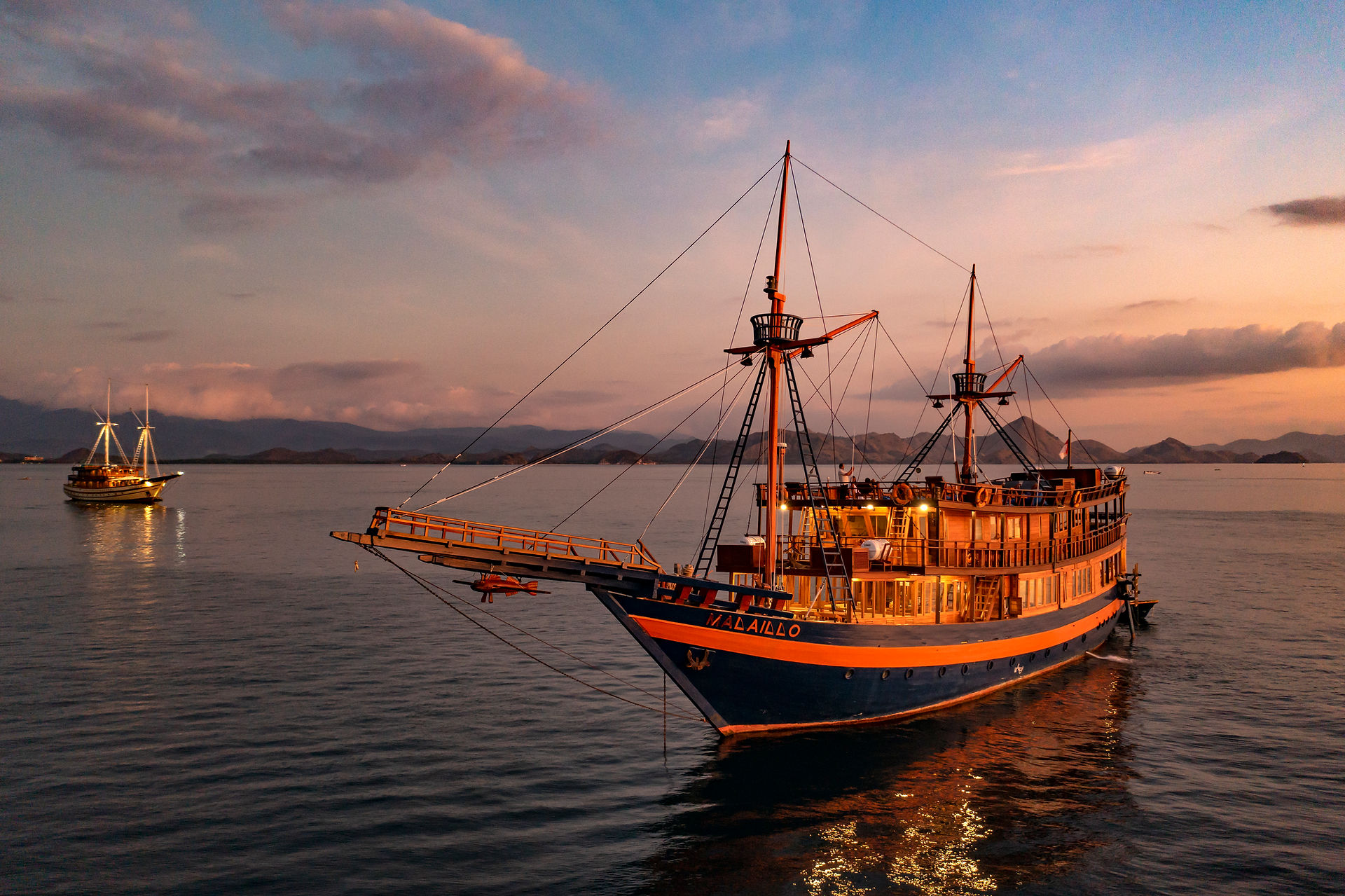
Malaillo Yacth 
Metita Resort 
Lotus Bungalow Villa Almarik Gangga Island Resort Papua Eco Paradise Resort


Comments