-02.png)
LATest e-bulletin April '26
Look at the endless innovative touring products developed by LAT. From slow tourism to tours aways from crowds, from an agile system of modular scheduled departures in different languages to arts, architecture, outdoor, experiential, culinary food and education packages, just to name a few!
All our offers are strictly carbon contribution @ LAT Climate Contribution, all emissions being calculated and offset by projects in cooperation with Climate Partners.
In this issue: ① Quote of the month ② The great illusion ③ Bali, Instagram-influenced halfwit tourism④ Malaysia, a life along the rivers ⑤ Singapore, new MICE opportunity in Mandai ⑥ LATest News ⑦ Thailand, the language of identity ⑧ Indonesia bans elephant rides ⑨Singapore, Wetlands by the Bay ⑩Malaysia, a new airline strengthening connectivity in Borneo ⑪ Thailand, free public transport in Chiang Rai: yay or nay?
Never fear quarrels, but seek hazardous adventures.
Alexandre Dumas
The great illusion
We’d like to argue that recent mobilizations in the United States and Europe, together with the outlook of younger generations, clearly contradict the nationalist narrative built on identity, fear, and the rejection of democratic limits. What we see instead is a growing demand for openness, cooperation, equality, and constitutional accountability. The large protests across thousands of U.S. cities and the demonstrations in Italy show that this is not isolated dissent but a broader democratic movement.
In our view, nationalist leaders such as Donald Trump, Giorgia Meloni, and Viktor Orbán fail to address the real concerns of citizens—stagnant wages, precarious work, rising living costs, weakened public services—and instead shift political debate toward identity conflicts that do not solve material problems.
At the same time, we believe the acceleration of digital capitalism and artificial intelligence is concentrating economic and technological power at unprecedented speed. Some technological elites even attempt to delegitimize democratic limits themselves. This creates a dangerous convergence: identity politics without pluralism, technology without regulation, and power without limits.
For us, the evidence is clear: the world is not closing—it is opening. The real question is whether politics is capable of interpreting this transformation or continues to deny it. The mobilizations we are witnessing and the positions taken by younger generations already point toward the direction we should take: more democracy, more cooperation, and stronger shared rules at the international level.
Bali, Instagram-influenced halfwit tourism
Disrespect for local culture and traditions has become a growing challenge, particularly as authorities struggle to address behaviour that offends long-standing religious and social norms. This has been exacerbated by a segment of visitors who treat the destination as a place where rules and good common sense do not apply.
In the age of social media, such behaviour is no longer contained or discreet. Incidents are widely shared online, amplifying their impact and reinforcing perceptions that the destination tolerates misconduct. This has contributed to an image at odds with local values of respect, restraint and communal harmony.
While stricter guidelines have been introduced governing conduct, sobriety and behaviour at sacred sites, enforcement remains difficult. Unruly and openly disrespectful actions by some visitors continue to undermine cultural integrity and human dignity at large.
At the same time, the commercialisation of cultural symbols has diluted their meaning. Traditions are increasingly reduced to commodities or souvenirs, eroding their significance and authenticity.
Recovering from this brutal type of overtourism (afflicting many destinations around the world, including our beloved city of Rome) presents a steep challenge. In response, authorities in Bali have introduced a range of measures aimed at regulating tourism, protecting culture and restoring balance.
These measures include higher tourist levies earmarked for environmental and cultural preservation, stricter visa controls, and a moratorium on new hospitality and leisure developments in heavily strained areas. Penalties for misconduct have been strengthened, with deportation now a risk for offences ranging from public indecency to disrespect at religious sites.
Efforts are also underway to improve waste management, address plastic pollution, safeguard freshwater supplies and develop transport infrastructure to ease congestion. In parallel, tourism promotion is shifting toward secondary destinations to reduce pressure on overcrowded areas.
While overtourism will not be resolved quickly, the message is clear: sensible, attentive visitors are most welcome, while those interested only in “Instagramming” their faces and butts at every corner may be better off staying home. Respect for social norms, local culture, laws, and values is non-negotiable, and this applies not only in Bali but everywhere in the world.

Malaysia, a life along the rivers
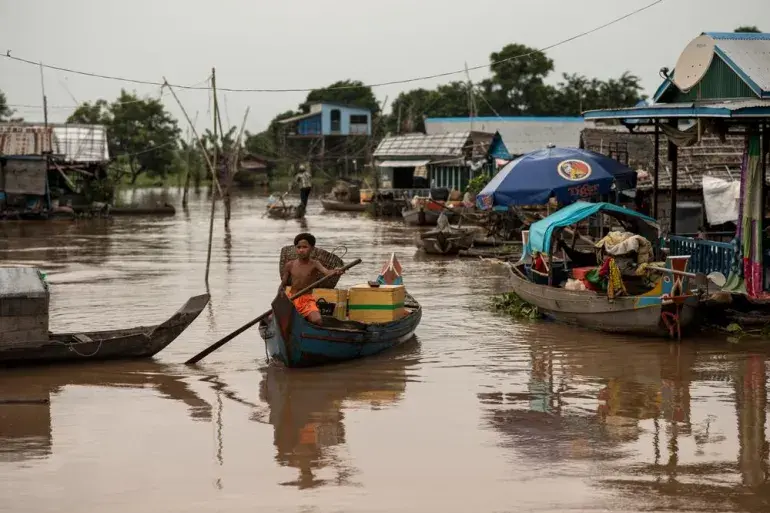
It is not unusual to find the word Kuala in the names of many Malaysian cities. One only needs to think of the capital itself, Kuala Lumpur, or one of the main cities on the eastern coast of the peninsula, Kuala Terengganu. The word Kuala means estuary, and therefore closely links the founding of these cities to the rivers that run through them.
About 240 km from Kuala Lumpur lies the charming town of Kuala Kangsar. The town is crossed by the Perak River, which shapes its landscape by providing transport routes, irrigation for agriculture, and scenic beauty that enhances landmarks such as the Ubudiah Mosque and the Sultan’s Palace. Historically, controlling this river meant controlling the state. Just a few kilometres north of Kuala Kangsar stands the Victoria Bridge, one of the oldest railway bridges in the country, which played a key role during the British colonial era in crossing the Perak River. This river, the second longest in Malaysia, flows through much of the peninsula, and two significant lakes were formed from its waters: Lake Cenderoh, also known as the “Dragon Lake” due to its shape resembling the Chinese mythological creature, in the Lenggong area; and Lake Temenggor, which is home to the Belum Rainforest Reserve.
Moving about 45 km towards the west coast, one reaches another settlement called Kuala Sepetang, just a few kilometres from Taiping. The Kuala Sepetang River, formed by the confluence of the Sepetang, Reba and Kapal Changkol rivers, is vital to the local economy, serving as the main transport artery for fishing, local livelihoods and eco-tourism. It supports a thriving traditional fishing village and provides essential navigation for mariculture (crabs, prawns and cockles) within the Matang Mangrove Forest Reserve.
Continuing north, about 70 km from George Town in Penang, lies the peaceful town of Kuala Kurau. The Kurau River is the lifeline of Kuala Kurau, fundamentally shaping the village’s economy, culture and coastal landscape. As a vibrant fishing community, the river provides essential access to the sea for fishing boats, supports local aquaculture, and enables the town’s traditional seafood-based food industries.
Travelling along Malaysia’s rivers offers a different and authentic perspective on the country: a slow journey through landscapes, villages and traditions, where water becomes the key to discovering stories, flavours and ways of life that have remained intact over time.
Singapore: new MICE opportunity in Mandai
In recent years, Singapore has expanded the Mandai Wildlife Reserve into an integrated nature-based destination in the northern part of the island. Traditionally associated with its zoological parks, the area is now being positioned as a location suitable for both leisure travel and corporate events, combining conservation environments with visitor infrastructure and event facilities.
Opened in November 2025, the Mandai Rainforest Resort by Banyan Tree is the first accommodation facility located within a nature reserve in Singapore. The property includes more than 300 rooms, including elevated units designed to integrate with the surrounding forest landscape near the Upper Seletar Reservoir. In addition to leisure stays, the resort provides spaces suitable for meetings, retreats, and small-to-medium corporate gatherings in a nature setting.
In March 2026, Mandai Wildlife Reserve introduced Exploria, an indoor attraction presenting global ecosystems through digital installations and interactive exhibits. The experience is designed as an educational journey focused on biodiversity and environmental awareness and can complement structured group programmes.
Mandai offers an alternative to central urban venues, with event spaces distributed across several parks within the reserve. At the Singapore Zoo, venues such as Forest Lodge and Pavilion by the Lake accommodate meetings and dinners overlooking the reservoir. The “Breakfast in the Wild” programme can also be adapted for small corporate groups. Bird Paradise includes function options at locations such as Penguin Cove Restaurant and Crimson Restaurant within the aviary environment. For evening programmes, Night Safari provides the Tipi Tent, a themed outdoor event space. River Wonders offers the Amazon Flooded Forest venue, while Rainforest Wild Asia includes the Cavern Restaurant, designed for group functions.
Overall, Mandai Wildlife Reserve expands Singapore’s range of event settings by combining nature-based experiences with structured facilities located within short distance of the city centre.
So Many Good Reasons to Work with LAT
Established in 1991. Independently owned and operated. Purely B2B with travel industry partners. Online booking engine with immediate confirmation of hotels, tours and transfers. Long experience in MICE industry. Knowledgeable and efficient reservations personnel. Fully committed to CSR. Direct access to a vast pool of local professional contributors. | Centralised bookings and payments for multi destination tours. 24/7 assistance in 4 different languages. Extensive selection of modular scheduled group departures in different languages. Owner of five boutique island hotels. Owner of one luxury Phinisi Yacht. Climate Contribution for all packages and services on offer. LAT app with updated itineraries and guest info (Apple and Play Stores). |
TATTLER
Thailand, the language of identity
A scene from the boys’ love drama Khemjira, set in Ubon Ratchathani, unexpectedly gained wide attention across Thailand and Laos—not for its ghost storyline, but for its use of the Isan dialect, rarely heard in mainstream Thai television.
Unlike typical urban-centred series, Khemjira places northeastern settings, rituals, and speech at the core of its narrative. Viewers responded not with surprise, but with recognition—seeing familiar language and culture presented without translation or simplification.
In a media landscape historically dominated by Bangkok perspectives, this visibility carries symbolic weight. Without directly addressing regional inequality, the series subtly normalizes speaking in a local voice “like home,” especially for younger audiences.
Online circulation has focused as much on accents and expressions as on the romance itself, resonating across Thailand and Laos where cultural continuities persist beyond borders. Notably, the show has avoided the usual backlash around dialect, sexuality, or regional identity.
In this way, Khemjira functions less as entertainment alone and more as a cultural signal: a quiet shift toward recognizing marginalized voices as part of mainstream Thai media. The ghost becomes secondary—what remains central are the long-unheard places and languages now simply allowed to be present.

HIGHLIGHTS
Indonesia bans elephant rides
Indonesia has officially banned elephant rides at zoos and conservation centres across the country following a directive from the Ministry of Forestry. The decision, welcomed by animal welfare organizations, marks a significant step toward more responsible wildlife tourism and stronger protections for captive elephants. Facilities that fail to comply risk losing their operating permits, and several attractions have already stopped offering rides and are transitioning to observation-based experiences instead. The ban reflects growing global awareness of the physical and psychological harm elephant riding can cause and signals a broader shift toward ethical wildlife encounters.
Singapore, Wetlands by the Bay
Singapore has announced plans for Wetlands by the Bay, a major new attraction at Gardens by the Bay that will include a flagship museum by the international art collective teamLab. Expected to open from 2028, the project will expand the existing wetlands area with more than 600 mangrove and coastal plant species while introducing immersive installations and a unique pedal-kayak experience that blends art, nature, and technology. The development marks the first major expansion of the gardens since they opened in 2012 and aims to offer visitors a new interactive way to explore Singapore’s urban biodiversity.
Malaysia, a new airline strengthening connectivity in Borneo
AirBorneo officially began operations in January 2026, following the acquisition and rebranding of MASwings by the Sarawak government. The airline was established to ensure essential air connections between remote communities across Sarawak and Sabah. In its initial phase, AirBorneo continues to operate turboprop aircraft inherited from MASwings, focusing on domestic connectivity and access to smaller airports across the island of Borneo. The airline is now entering a new stage of development with the introduction of jet aircraft. AirBorneo will indeed take delivery of three Boeing 737-800, marking its first step into regional jet operations. These aircraft are expected to enter service in July 2026, operating from the airline’s hub in Kuching. Initial routes will connect Kuching with key regional destinations such as Kuala Lumpur, Singapore and Kota Kinabalu, improving accessibility to Sarawak for both tourism and business travel.
Thailand, free public transport in Chiang Rai: yay or nay?
At a time when getting around is becoming increasingly expensive, Chiang Rai’s decision to introduce free electric buses feels almost counter current. Not so much because of the idea itself, but because of how quickly it has been put into practice: no vague announcements or long-term plans, just a service that is already running and accessible to everyone. The service operates daily, with regular departures and a circular route connecting the city’s main areas. This is not a symbolic measure — it is designed to be used. And here lies the first answer to the question in the headline: yes, it is a concrete solution, at least in the short term. For residents, the benefit is immediate: lower daily expenses at a time when fuel costs are steadily rising. And it’s not just about money. Moving around more easily, with less stress and without having to plan every trip around a budget, has a direct impact on quality of life. On the environmental side, the message is equally clear. Electric buses represent a real step toward more sustainable mobility, and the attempt to reduce reliance on private cars is evident. Will it truly work? Probably only in part — but it is still more than what many cities achieve by stopping at declarations. So, is it an experiment or a model? The most honest answer is: both. It is a concrete solution today because it addresses real problems. But it is also an experiment, because the real challenge will be sustaining it over time. Free services and financial sustainability rarely go hand in hand, and this is where the project will truly be tested. In the meantime, however, Chiang Rai has made a clear choice: to act now rather than wait for perfect conditions that often never arrive. And in a context where many cities talk about change without acting, even this — in its own way — is already a result.

Our whole product for free and independent travellers, groups and MICE is based on a Climate Contribution programme. This means that part of the greenhouse gas emissions that will be generated are offset by projects in collaboration with Climate Partner, one of the leading climate protection solution providers for companies.
The arising emissions are being compensated by supporting a third-party certified forest conservation project in Indonesia. This initiative plays a vital role in protecting the habitat of critically endangered orangutans, while also preserving biodiversity and maintaining important carbon sinks. By preventing deforestation and promoting sustainable land use, the project helps reduce CO₂ emissions and supports the long-term resilience of Indonesia’s ecosystems.

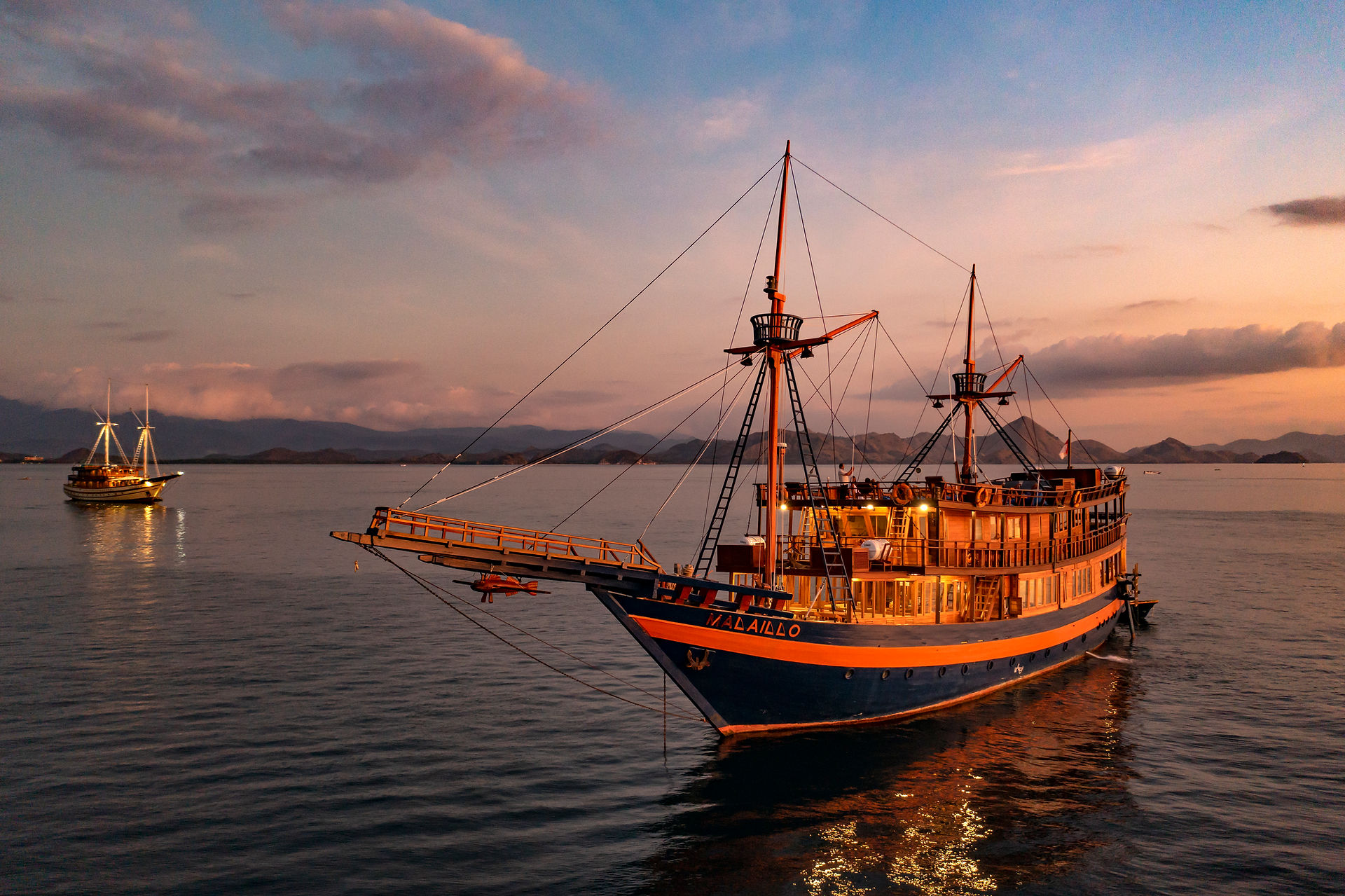
For over thirty years, Lotus Asia Tours Group has provided services and assistance to travellers the world over, specialising in the design and implementation of corporate events, activities, incentive tours and motivational travel, targeted at FIT, GIT and MICE markets, in Indonesia, Malaysia, Singapore, and Indochina. The group also operates five boutique island hotels in Indonesia, in Lombok, Bali, Sulawesi, Papua and Maluku, as well as a seven-cabin luxury sailing yacht.
To learn more about our brand please head to our website or contact us directly; we look forward to hearing how we could help make your next trip, tour or event memorable and successful.
Corporate Office
D-5-4 Megan Avenue 1, 189 Jalan Tun Razak, 50400 Kuala Lumpur, Malaysia
T: +60 (0)3 21617075 · E: latgroup@lotusasiatours.com
OUR HOTELS AND OUR LUXURY SAILING YACHT
Click here for more details about our resorts.
Click here for more details about our Phinisi vessel.
Malaillo Yacth 
Metita Resort 
Lotus Bungalow Villa Almarik Gangga Island Resort Papua Eco Paradise Resort


Comments