-02.png)
LATest e-bulletin July'26
Look at the endless innovative touring products developed by LAT. From slow tourism to tours aways from crowds, from an agile system of modular scheduled departures in different languages to arts, architecture, outdoor, experiential, culinary food and education packages, just to name a few!
All our offers are strictly carbon contribution @ LAT Climate Contribution, all emissions being calculated and offset by projects in cooperation with Climate Partners.
In this issue: ❶ Quote of the Month ❷ Buridan Donkey’s Goes on Holidays ❸ Belitung: Granite, Sea and Soul ❹ Places We Already Know ❺ LATest News ❻ Instructions for Getting Lost ❼ Scoot Flies to Belintung ❽ Singapore New Harbour Terminal ❾ Thailand / Malaysia Border ❿ Timor Leste Ambitions
Who looks outside dreams, who looks inside awakes.
Carl Jung
Buridan’s Donkey Goes on Holiday
The image of Buridan’s Donkey is simple, almost comic: a donkey stands exactly between two identical bundles of hay. Since both options appear equally attractive, the animal cannot find a rational reason to choose one over the other. It remains still, trapped in perfect indecision, and eventually starves.
Behind the absurdity lies a serious psychological mechanism. The donkey is not stupid because it cannot think; it is paralysed because it thinks too much without possessing a clear hierarchy of values. When every option appears equivalent, the mind searches for one decisive argument. If that argument does not appear, the decision process collapses.
This is the paralysis of analysis: the moment in which information, instead of helping action, prevents it. The mind keeps collecting data, comparing details, imagining consequences, and fearing regret. Choice becomes less an expression of freedom and more a source of anxiety. The problem is no longer the absence of options, but the inability to transform options into decisions.
In human beings, this mechanism is even more sophisticated and therefore more dangerous. We are rarely paralysed because two choices are truly identical. We are paralysed because we lack the cultural, emotional, or intellectual tools to evaluate them properly. We confuse quantity of information with quality of judgment. We believe that one more review, one more article, one more opinion, or one more comparison will finally produce certainty. It rarely does.
At a certain point, the search for the best choice becomes a way to avoid choosing at all.
This applies perfectly to the modern travel industry. The contemporary traveller is no longer facing two bundles of hay, but an entire digital field of them. Flights, hotels, destinations, restaurants, excursions, online reviews, rankings, reels, blogs, and influencers all compete for attention. Every beach is “hidden,” every hotel is “authentic,” every experience is “unmissable,” and every destination is apparently the place to visit before everybody else does.
The final consumer is therefore overwhelmed by possibility. He has access to everything, but often lacks the knowledge to understand what matters. He can compare hotel ratings but may not understand location. He can read restaurant reviews but may not understand local culture. He can watch destination videos but may not distinguish atmosphere from marketing. He can collect information endlessly without developing judgment unless he is furnished of the necessary intellectual and cultural tools to choose independently.
The result is a curious modern tragedy: the traveller is no longer under-informed, but over-informed and under-equipped. Like Buridan’s Donkey, he does not starve between two piles of hay; he collapses between 4,000 hotel options and a filter menu longer than the British Encyclopaedia.
This is where the travel industry has both a problem and an opportunity. Its problem is that it has contributed to the noise. In trying to sell everything as unique, it has made everything sound identical. Its opportunity is to restore meaning through selection, interpretation, and trust.
A good travel professional is not merely a supplier of information. The internet already supplies too much of that. A good travel professional is a filter, a translator, and sometimes a merciful executioner of unnecessary options. He reduces complexity. He explains what matters. He removes false choices. He helps the traveller move from confusion to decision. Or at least it should, assuming for the sake of argument that it possesses the intellectual and cultural qualities described above.

Belitung: Granite, Sea and Soul
Some destinations captivate visitors with their beaches. Others with their culture, cuisine, or history. Belitung, a tranquil island in Indonesia’s Java Sea, offers something far more unusual: a landscape shaped by millions of years of geological forces and a community that has transformed its future by embracing and protecting that heritage.
At first glance, Belitung seems almost surreal. Along its coastline, enormous granite boulders rise dramatically from white sandy beaches and crystal-clear waters, creating scenes that appear sculpted by nature’s imagination. These remarkable rock formations, some dating back more than 200 million years, are among the island’s most distinctive features and have become iconic symbols of the destination.
Yet Belitung’s beauty extends far beyond its beaches. Offshore, more than one hundred small islands dot the turquoise sea, inviting travelers to explore hidden coves, pristine snorkelling spots, and untouched stretches of coastline. Among them is Pulau Lengkuas, home to a historic Dutch lighthouse that has guided sailors since the nineteenth century and continues to stand watch over the surrounding waters. Nearby coral reefs teem with marine life, while conservation initiatives help protect nesting sea turtles that return to these shores year after year.
What makes Belitung particularly compelling is the story of its transformation. For generations, the island’s economy revolved around tin mining, an industry that profoundly shaped both its landscape and its communities. Today, many of those former mining areas have found new purpose, becoming part of a broader effort to showcase the island’s geological heritage and educate visitors about its remarkable journey.
This evolution reached international recognition when Belitung was designated a UNESCO Global Geopark, highlighting not only its extraordinary natural assets but also the commitment of local communities to sustainable development. Rather than relying on large-scale tourism projects, the island has embraced a community-led model that places residents at the heart of the visitor experience.
Travelers exploring Belitung are often guided by local fishermen who now share their intimate knowledge of the sea through island-hopping excursions. Family-run guesthouses offer an authentic alternative to large resorts, while local guides bring the island’s history, geology, and traditions to life. Every journey becomes an opportunity to connect directly with the people who call Belitung home.
The cultural experience is equally rewarding. Traditional coffee shops, known as Warung Kopi, remain gathering places where visitors can experience the island’s unique blend of Malay and Hakka Chinese influences. Here, conversations flow as freely as the coffee, offering a glimpse into a way of life that has remained deeply rooted despite the island’s rapid transformation.
For today’s travelers, Belitung represents a refreshing alternative within Southeast Asia. It is a destination where nature remains largely unspoiled, where tourism supports local livelihoods, and where every beach, granite outcrop, and fishing village tells a story of resilience and renewal.
As global tourism increasingly seeks authenticity, sustainability, and meaningful experiences, Belitung stands out as one of Indonesia’s most intriguing emerging destinations—an island where extraordinary natural beauty and community stewardship come together to create something genuinely special.

THE OBSERVATORY - Notes and Observations from LAT Key Personnel
Places We Already kKnow
by Andrea Dorna / Thailand Operations Manager
There is something slightly strange about the way people travel now, and it often happens before the trip even begins: they arrive somewhere they already know.
Not in the obvious sense of having been there before. But in the sense that they have already seen it many times. The sunset, the pool, the table at the back of the bar, the exact corner of the beach. They may already have saved the video, recognized the breakfast, imagined the photo they are going to take.
That is why it increasingly feels as if travel no longer begins with discovery. It begins with confirmation.
In Southeast Asia, this is especially easy to notice. Bangkok, Bali, and Singapore are very different places, but they are all now shaped, in one way or another, by the same image economy. Many travelers arrive with an artificial memory of the destination before they have actually experienced it. They already know the rooftop bars, the night markets, the infinity pools, the beach clubs. At times, they seem to move through a place less by reading its streets than by recognizing images they have seen online.
I am not even sure this makes travel better or worse. It certainly makes it different.
For a long time, travel also meant accepting a certain amount of uncertainty. You got lost more easily. You ended up in the wrong restaurant. You booked a hotel that looked one way in the pictures and turned out to be something else entirely. Some places surprised you. Others disappointed you. But that instability was also part of what made a trip memorable.
Now tourism increasingly tries to remove as much of that instability as possible. Everything has to be visible in advance, legible in advance, verified in advance. Algorithms, after all, reward what can be grasped instantly. What can be recognized at once.
Hospitality is adapting to this logic very quickly. Many hotels are no longer designed only to be inhabited, but to be recognized. Sometimes these spaces seem to exist online before they fully exist in real life. A photogenic lobby is no longer just there to welcome the guest. It is also there to reassure them that yes, this is exactly the place they thought they were coming to.
At the same time, something subtler is changing in the behaviour of travelers themselves. There is a growing intolerance for negative surprise. People want authenticity, but without too much risk. Discovery, but without real disorientation. The hidden place, provided it has already been thoroughly documented. That is the paradox: contemporary tourism talks constantly about experience, while many experiences now arrive partly pre-consumed.
Of course, every generation likes to idealize its own way of traveling, so some caution is necessary. The past had its own cliches, shortcuts, and postcards too. But perhaps there was one important difference: many things remained invisible until you arrived. There was still room for imagination. Now, anticipation can easily become more intense than the experience itself.
And yet, when I think about what stays with me, it is almost never the moments I planned for. It is the wrong turn in the rain, the unexpected conversation, the mediocre breakfast in an unremarkable place, the afternoon with no real agenda. Maybe the issue is not simply that the world has become too visible. Maybe, little by little, we are losing the ability to arrive somewhere without already knowing almost everything about it. And maybe that is still one reason we travel.
So Many Good Reasons to Work with LAT
Established in 1991. Independently owned and operated. Purely B2B with travel industry partners. Online booking engine with immediate confirmation of hotels, tours and transfers. Long experience in MICE industry. Knowledgeable and efficient reservations personnel. Fully committed to CSR. Direct access to a vast pool of local professional contributors. | Centralised bookings and payments for multi destination tours. 24/7 assistance in 4 different languages. Extensive selection of modular scheduled group departures in different languages. Owner of five boutique island hotels. Owner of one luxury Phinisi Yacht. Climate Contribution for all packages and services on offer. LAT app with updated itineraries and guest info (Apple and Play Stores). |
TATTLER
Instructions for Getting Lost
"Curiouser and curiouser!" Alice utters these words after drinking a mysterious potion and discovering that the world no longer obeys the rules she thought she knew. Doors become impossible, directions lose their meaning, and certainties turn out to be far more fragile than she had imagined.
Before and after her, in truth, we too have always gotten lost. Not because we routinely stumble upon White Rabbits or Cheshire Cats, but because much of adult life seems devoted to avoiding disorientation. We consult maps before setting off, read reviews before booking a restaurant, study destinations, schedules and itineraries even before experiencing them. Every experience seems to need to be understood, classified and explained in advance.
Perhaps because we doubt our own ability to find our way on our own two feet. We need supports, instructions, confirmations. Truly searching, truly thinking, turning thoughts and feelings into something concrete — it frightens us. Sometimes it paralyzes us. Wonderland Upside Down instead proposes a small act of rebellion, perhaps even a ridiculous one, but no less necessary for that, against this need to always know who we are, where we are, and where we're going.
The experience begins with the search for an anonymous entrance hidden in an alley in Singapore. Nothing announces itself in any obvious way. There are no flashy signs or monumental thresholds separating reality from fiction. The passage happens gradually, almost by chance, at the moment when curiosity takes the place of certainty.
Beyond that door, everyday logic loses part of its authority. Rooms lead to other rooms, clues emerge where there seemed to be nothing, unexpected characters accompany the visitor through stories, riddles and deliberately absurd situations. One proceeds not so much by following a direction as by accepting to question one's own expectations.
The experience blends immersive theater, storytelling, games and gastronomy into a formula that's hard to classify. It is not merely a theatrical performance, nor simply an escape room. It is, rather, a temporary invitation to suspend the need to immediately understand what is happening. And this is perhaps its most interesting aspect.
We live in an age that rewards efficiency, competence and predictability. And yet many of the experiences we remember most fondly arise from the unexpected, from uncertainty, from that brief moment when we don't know exactly what's happening or where the next step will take us.
The appeal of Wonderland, then as now, doesn't lie in fantasy for its own sake. It lies in the ability to shift one's point of view.
Alice doesn't really discover another world. She discovers how strange her own can appear when observed without the habits and conventions that normally make it familiar. The potions, the impossible characters and the surreal dialogues are merely the means through which this transformation takes place.
Wonderland Upside Down picks up on the same insight. The puzzles, the actors and the settings are not really the point of the experience. They are, rather, tools that allow one to set aside, for a few hours, the reassuring tyranny of logic and rediscover the pleasure of wonder. Ultimately, the value of the experience lies not so much in finding the right answers as in accepting that, for a brief moment, the questions might be more interesting than the answers.
Lewis Carroll had grasped a simple truth that still holds today: getting lost is not always the opposite of finding oneself. Very often, it is simply how one begins.

HIGHLIGHTS
Scoot Flies to Belintung
Belitung is set to boost international tourism with Scoot's new direct service from Singapore, its only international air connection. The route opens access to regional and long-haul markets while supporting the island's sustainable tourism ambitions. Home to a UNESCO listed Geopark, Belitung is known for pristine beaches, granite rock formations, island-hopping, snorkelling and rich marine life. Conservation remains a priority, with protected wildlife including the endangered tarsier. Low visitor numbers and community led tourism continue to define Belitung as an authentic, uncrowded destination.
Singapore New Harbour Terminal
Singapore Cruise Centre will relocate all ferry and cruise operations to the new Singapore Cruise Centre (HarbourFront) terminal this July. Batam Fast Ferry will move on 7 July, followed by all other ferry operators and cruise services on 15 July. Existing ferry routes, schedules and berth locations will remain unchanged. The new terminal offers upgraded infrastructure, technology-enabled services, improved passenger facilities, retail outlets, dining options and money changers. Direct connections to HarbourFront MRT Station and VivoCity ensure seamless access for travellers.
Thailand / Malaysia Border
The new Sadao Customs checkpoint in Songkhla is expected to officially open on July 10 after infrastructure works and key legal procedures are completed, paving the way for expanded trade, tourism and cross-border connectivity between Thailand and Malaysia.
Timor Leste Ambitions
Timor-Leste has achieved a tourism milestone with UNESCO's designation of Nino Konis Santana National Park as the country's first Biosphere Reserve. Located at the island's eastern tip, the protected area encompasses pristine forests, coral reefs, beaches and culturally significant sites, including habitats within the Coral Triangle. The recognition is expected to boost nature-based and community tourism, with activities such as hiking, birdwatching, snorkelling, diving and cultural experiences. The designation also reinforces Timor-Leste's commitment to conservation and sustainable tourism development.

Our whole product for free and independent travellers, groups and MICE is based on a Climate Contribution programme. This means that part of the greenhouse gas emissions that will be generated are offset by projects in collaboration with Climate Partner, one of the leading climate protection solution providers for companies.
The arising emissions are being compensated by supporting a third-party certified forest conservation project in Indonesia. This initiative plays a vital role in protecting the habitat of critically endangered orangutans, while also preserving biodiversity and maintaining important carbon sinks. By preventing deforestation and promoting sustainable land use, the project helps reduce CO₂ emissions and supports the long-term resilience of Indonesia’s ecosystems.

For over thirty years, Lotus Asia Tours Group has provided services and assistance to travellers the world over, specialising in the design and implementation of corporate events, activities, incentive tours and motivational travel, targeted at FIT, GIT and MICE markets, in Indonesia, Malaysia, Singapore, and Indochina. The group also operates five boutique island hotels in Indonesia, in Lombok, Bali, Sulawesi, Papua and Maluku, as well as a seven-cabin luxury sailing yacht.
To learn more about our brand please head to our website or contact us directly; we look forward to hearing how we could help make your next trip, tour or event memorable and successful.
Corporate Office
D-5-4 Megan Avenue 1, 189 Jalan Tun Razak, 50400 Kuala Lumpur, Malaysia
T: +60 (0)3 21617075 · E: latgroup@lotusasiatours.com
OUR HOTELS AND OUR LUXURY SAILING YACHT
Click here for more details about our resorts.
Click here for more details about our Phinisi vessel.
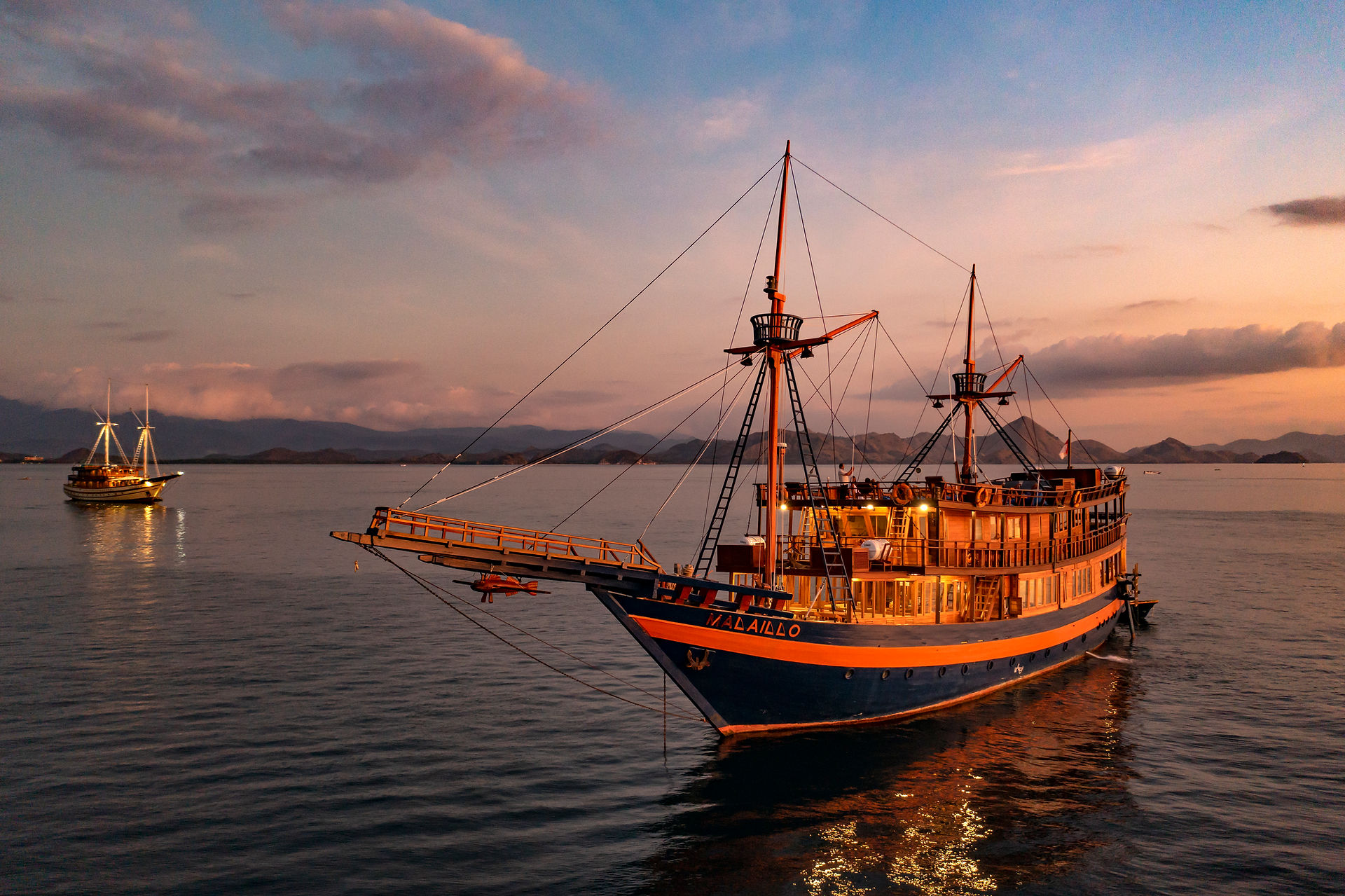
Malaillo Yacth 
Metita Resort 
Lotus Bungalow Villa Almarik Gangga Island Resort Papua Eco Paradise Resort


Comments