-02.png)
LATest e-bulletin March '26
Look at the endless innovative touring products developed by LAT. From slow tourism to tours aways from crowds, from an agile system of modular scheduled departures in different languages to arts, architecture, outdoor, experiential, culinary food and education packages, just to name a few!
All our offers are strictly carbon contribution @ LAT Climate Contribution, all emissions being calculated and offset by projects in cooperation with Climate Partners.
In this issue: ① Quote of the month ② Story of a guardian devil ③ Let Mickey build while Donald wrecks ④ Koh Tao: diving, the thoughtful way ⑤ Preserving the Keliki tradition in Bali ⑥ LATest News ⑦ The legend of Lake Toba ⑧ Johor-Singapore SEZ ⑨Changi Airport sets new record ⑩Singapore for the young professionals
The two most common elements in the universe are hydrogen and stupidity.
Harlan Ellison
Story of a guardian devil
The fantastic autobiography of Fabio Delisi (Director and CEO of the LAT Group) is released in March: Ube Zleb, Story of a guardian devil, published by Versante Sud. In this narrative there emerges, unmistakably, the tension between the fear of the unforeseen and the excitement that the unforeseen itself generates, felt and lived intensely by the story central character.
A tension so vibrant that it gives rise to a progress against the current, following a path dictated first by instinctive intuition and later by reflective awareness, rather than guided by the acceptance of an order that appears comfortably, but illusorily, reassuring, by the quiet settling into group conformity.
It is perceptible from the very first pages and accompanies the reader to the final lines. This tension presses forward at every turn, hidden in every corner, carrying the reader through a constant desire to move physically and metaphysically, beyond what is predetermined and taken for granted.
The protagonist of the tale, the literary interpreter of Fabio’s life experience, is allergic to staleness. He overcomes it thanks to Ghaber, the executing hand of Ube Zleb—the guardian devil who aids those who perceive him and welcome him within his folds.
It is a ride through the perplexities provoked by the reassuring yet deceptive appearances and promises of social convention, of the group, of the bell tower, and of the cultural containers formed through the long passive acceptance of the mythology of social, communal, and familial order.
From this perspective, The Flow of Ube Zleb is a narrative in which many of Fabio’s contemporaries (those born between the 1950s and the 1960s) will easily recognize themselves. Yet it has been conceived and written above all for younger generations, carrying an explicit message: not to accept—and above all not to take for granted—what appears and what is shown every day. Instead, to leave all doors and windows open, allowing currents to flow freely, unafraid to surrender with trust to the embrace of Ube.
Within that embrace one finds oneself and the trust in who we are and in what we consciously wish to do.
Fabio lives astride two centuries and two millennia: between the analog era and the digital one, from the years of the Cold War to the advent of globalization, between fleeting myths and millennial wisdom.
Born in 1958 in Brazil, he spent his early childhood in Argentina before moving to Italy, to Rome, where he lived until the age of thirty. Since then, he has lived in Southeast Asia, and today resides in Kuala Lumpur, dedicating himself to a life of enterprise in the tourism sector as the head of the LAT Group.
Mountains and mountaineering were fundamental formative elements in his life. To both Fabio devoted passionately and relentlessly fifteen years of his life, from adolescence to the maturity of a young man.
More than seven hundred ascents in the Alps and around the world, along with numerous first ascents of high technical and environmental level, made him a renowned mountaineer in Italy during the 1980s.
He also practiced the profession of alpine guide, an experience that led him to reflect deeply on those years and triggered the choices and events that followed.
He was born male, though over time he has learned that his nature and sensitivity transcend that gender. His mountaineering past flowed into a life of enterprise in tourism, of painting, and of writing in the warm and humid tropics.
Transit is his condition; mobility the physical expression of his progress, emotional, restless, fleeing from a sedentary stillness tinged with unacceptable melancholy.
The chance unfolding of events has made Fabio transitory both within and without, placing him, physically and spiritually, in permanent passage: through time, through space, through sex, through feelings; polyvalent, without any definition, always searching for an adequate pronoun that, as he has now realized, does not exist.

Let Mickey build while Donald wrecks
Thailand is exploring a bold vision: bringing Southeast Asia’s first Disneyland to the Eastern Economic Corridor, near Bangkok. Far from just a theme park, the project aims to revitalize tourism, foster entertainment industries, and connect infrastructure across the region.
Tourism has always been a central pillar of Thailand’s economy, accounting for nearly 20% of GDP, and the country is well aware of how much it depends on this sector. Yet recent challenges, including a strong baht, border disputes with Cambodia, and safety concerns, have slowed growth.
About 33 million foreign visitors arrived last year, almost 20% below the 2019 peak, and while the government hopes for a 10% rebound in 2026, projections suggest numbers may remain largely flat. The decline highlights an urgent need to reinvigorate tourism, not as a return to the past, but as a strategic opportunity to innovate, attract new audiences, and strengthen local economies.
In this context, Disneyland is more than an entertainment project. It reflects Thailand’s deliberate approach to harnessing global brands and infrastructure to support an economy where tourism plays a central role, linking economic growth with cultural experiences and community benefits. The scale of the project inevitably brings into focus the state of the market itself, which has yet to return to pre-pandemic levels, and whether the region’s recovery is sufficiently resilient to attract a long-term investment of this scale from Disney.
The real challenge will be not simply constructing attractions but embedding the project into Thailand’s social and economic fabric, ensuring that tourism remains both a cultural and economic engine for the country, now and in the future.
Koh Tao: diving, the thoughtful way
Koh Tao, a small island in the Gulf of Thailand, has long been famous for its crystal-clear waters and vibrant marine life. In recent years, however, the underwater landscape has become more than just a scenic backdrop: it has turned into a barometer of sustainability and a laboratory for community, tourism, and environmental stewardship.
The island’s coral reefs, among the most frequented by divers worldwide, have suffered severe damage due to rising sea temperatures, pollution, and heavy tourist traffic. Yet Koh Tao has refused to be a passive observer. Today, dive schools and local organizations are transforming visitors into active participants in marine conservation. From eco-dives and weekly underwater clean-ups to coral restoration courses and environmental education programs, divers become temporary guardians of the marine life they encounter.
This movement represents more than a simple ecological initiative. It signals a cultural shift: tourism is no longer merely consumption of nature, but an opportunity to foster awareness, responsibility, and community engagement. Every dive becomes a small act of protection, every visitor a potential advocate for the sea.
Koh Tao’s model is already inspiring other destinations in Thailand, from Pattaya to Koh Phi Phi, proving that sustainability and tourism can grow hand in hand, creating positive impacts for both ecosystems and local economies. The future challenge will be to involve more local residents, ensuring that environmental protection becomes an integral part of the island’s culture, allowing future generations to experience and cherish these marine treasures.

Preserving the Keliki tradition in Bali
In Keliki village near Ubud, local art schools play a quiet but vital role in safeguarding the intricate Keliki painting tradition. Developed in the 1970s, the style became closely associated with the village and gained recognition among collectors beyond Bali. Distinguished by exceptionally fine hand-drawn lines, Keliki works depict scenes of Balinese daily life — farmers in rice fields, temple rituals and dancers in performance — alongside elements of Hindu mythology.
Despite its early success, changing tastes and shifting tourist demand led to declining incomes, placing the craft at risk of disappearance. In response to this downturn, schools were established offering free after-school instruction to local children to ensure continuity of the artform. Today, students learn the discipline required to master the miniature style, a process that can take years of steady practice.
Supported partly through art sales and partnerships with nearby resorts, the initiative reflects a broader model of culturally grounded tourism. Rather than positioning art as a souvenir industry, the schools reinforce painting as a living expression of Balinese identity. At a time when Bali faces mounting overtourism pressures and the commodification of culture, such community-based efforts demonstrate how heritage preservation and visitor engagement can coexist — not as spectacle, but as continuity.

So Many Good Reasons to Work with LAT
Established in 1991. Independently owned and operated. Purely B2B with travel industry partners. Online booking engine with immediate confirmation of hotels, tours and transfers. Long experience in MICE industry. Knowledgeable and efficient reservations personnel. Fully committed to CSR. Direct access to a vast pool of local professional contributors. | Centralised bookings and payments for multi destination tours. 24/7 assistance in 4 different languages. Extensive selection of modular scheduled group departures in different languages. Owner of five boutique island hotels. Owner of one luxury Phinisi Yacht. Climate Contribution for all packages and services on offer. LAT app with updated itineraries and guest info (Apple and Play Stores). |
TATTLER
The legend of Lake Toba
Legends are part of human history. Storytellers have always stood at the centre of human settlements, especially before the great process of globalization that began with the Age of Exploration and colonialism. The Batak tribe was no exception.
The Batak are an Austronesian ethnic group from northern Sumatra and are divided into several sub-groups, including Toba, Karo, Mandailing, Simalungun, and Pakpak. Near the famous Lake Toba, the Toba Batak lived in a constant balance between war and peace, between territorial expansion and the defence of their borders.
The various kings who succeeded one another over the years had the arduous task of maintaining this balance in a complex and ever-changing world. Their religion was animist; the influence of Christianity would only arrive in the 19th century. And, like all animist peoples, they possessed a rich heritage of myths and stories passed down orally.
The origin of Lake Toba, for example, is one of the most fascinating stories in all of Indonesia. It is a legend about the importance of promises and the consequences of words spoken carelessly.
Long ago, in a small village in northern Sumatra, there lived a young, poor but hardworking farmer named Toba. One day, while fishing in a river, he caught a golden fish with shimmering scales. Hungry, he decided to cook it, but as soon as he entered his hut, something extraordinary happened: the fish transformed into a beautiful woman.
The woman explained that she was a magical being, the victim of a malevolent curse. To thank him for freeing her, she agreed to marry him—but on one condition: Toba must never reveal her true origin to anyone.
The young man accepted, and for several years they lived happily together. They had a son, Samosir, who, however, proved to be lazy and irresponsible. One day, Toba asked him to bring lunch to the fields. On the way, the boy ate almost all the food and arrived at his father’s side with the basket nearly empty.
Exasperated by his son’s behaviour, Toba lost control and shouted: “You are truly the son of a fish!”
The very moment he uttered those words, he realized he had broken his promise. But it was already too late.
The sky darkened, black clouds covered the sun, and his wife returned to her original form. Before disappearing, she told her son to climb to the highest hill. Soon after, torrential rain began to fall without stopping, until the entire valley was flooded, forming an immense lake.
That lake is today known as Lake Toba. And the island at its centre, Samosir Island, according to legend, is the very hill where the boy found refuge and was saved.

HIGHLIGHTS
Johor-Singapore SEZ
The Johor-Singapore Special Economic Zone (SEZ) is gaining significant investor interest, with over US$4.3 billion committed so far as Singapore-linked companies increasingly establish operations in Johor. Designed to leverage the comparative advantages of both sides — Singapore’s capital access and governance with Johor’s land availability, cost efficiencies and room for expansion — the SEZ aims to emerge as a key ASEAN growth corridor rather than a simple “Malaysia’s Shenzhen” replica. Early investments span sectors including data centres, high-tech manufacturing and logistics. The zone is supported by coordinated policy measures, streamlined regulatory frameworks and targeted tax incentives intended to enhance cross-border business efficiency. The initiative reflects broader regional integration efforts to attract multinational capital, strengthen connectivity — particularly through the Rapid Transit System scheduled to open in 2027 — and build a more integrated economic ecosystem between Malaysia and Singapore.
Changi Airport sets new record
Indonesia’s Ministry of Tourism has tightened accommodation licensing after finding widespread unlicensed listings on online travel platforms, particularly in Bali, raising concerns over safety, service standards and fair competition. Under the new rules, all accommodation providers must hold valid operating licenses and correct business classifications by March 31, 2026. Properties that fail to comply risk removal from online platforms. Government mapping shows a significant gap between online listings and licensed properties. In Bali, more than 29,000 non-hotel units were listed online, compared with about 14,500 registered. In Jakarta, only around 1,500 of roughly 5,000 listed non-hotel properties held valid licenses. Authorities said unlicensed operations undermine safety, data accuracy, tax compliance and local revenue planning. The ministry is coordinating with regional governments and major platforms and has rolled out education, verification and support programmes to help operators comply, particularly smaller businesses. Industry groups have welcomed the move but stressed the need for consistent enforcement, clearer technical classifications and a review of foreign investment rules in the accommodation sector.
Singapore for young professionals
Singapore is intensifying its focus on travellers aged 25 to 39, a demographic that accounted for more than 40% of international arrivals in 2025. Through its global campaign We don’t wait for fun, the Singapore Tourism Board (STB) aims to convert the segment’s rising spending power and high travel propensity into confirmed bookings across nine key markets, including China, Indonesia and India. The campaign has leveraged major events such as Lady Gaga’s Asian tour stop, the Grand Prix Season Singapore and Singapore Art Week, combining concerts, lifestyle activations and immersive dining experiences. With expanded digital rollouts across Asia in 2026, STB is positioning Singapore as a destination for authentic, self-discovery-driven experiences — from heritage tours to snowboarding — aligning with its long-term Tourism 2040 strategy to drive visitor growth and spending.

Our whole product for free and independent travellers, groups and MICE is based on a Climate Contribution programme. This means that part of the greenhouse gas emissions that will be generated are offset by projects in collaboration with Climate Partner, one of the leading climate protection solution providers for companies.
The arising emissions are being compensated by supporting a third-party certified forest conservation project in Indonesia. This initiative plays a vital role in protecting the habitat of critically endangered orangutans, while also preserving biodiversity and maintaining important carbon sinks. By preventing deforestation and promoting sustainable land use, the project helps reduce CO₂ emissions and supports the long-term resilience of Indonesia’s ecosystems.

For over thirty years, Lotus Asia Tours Group has provided services and assistance to travellers the world over, specialising in the design and implementation of corporate events, activities, incentive tours and motivational travel, targeted at FIT, GIT and MICE markets, in Indonesia, Malaysia, Singapore, and Indochina. The group also operates five boutique island hotels in Indonesia, in Lombok, Bali, Sulawesi, Papua and Maluku, as well as a seven-cabin luxury sailing yacht.
To learn more about our brand please head to our website or contact us directly; we look forward to hearing how we could help make your next trip, tour or event memorable and successful.
Corporate Office
D-5-4 Megan Avenue 1, 189 Jalan Tun Razak, 50400 Kuala Lumpur, Malaysia
T: +60 (0)3 21617075 · E: latgroup@lotusasiatours.com
OUR HOTELS AND OUR LUXURY SAILING YACHT
Click here for more details about our resorts.
Click here for more details about our Phinisi vessel.
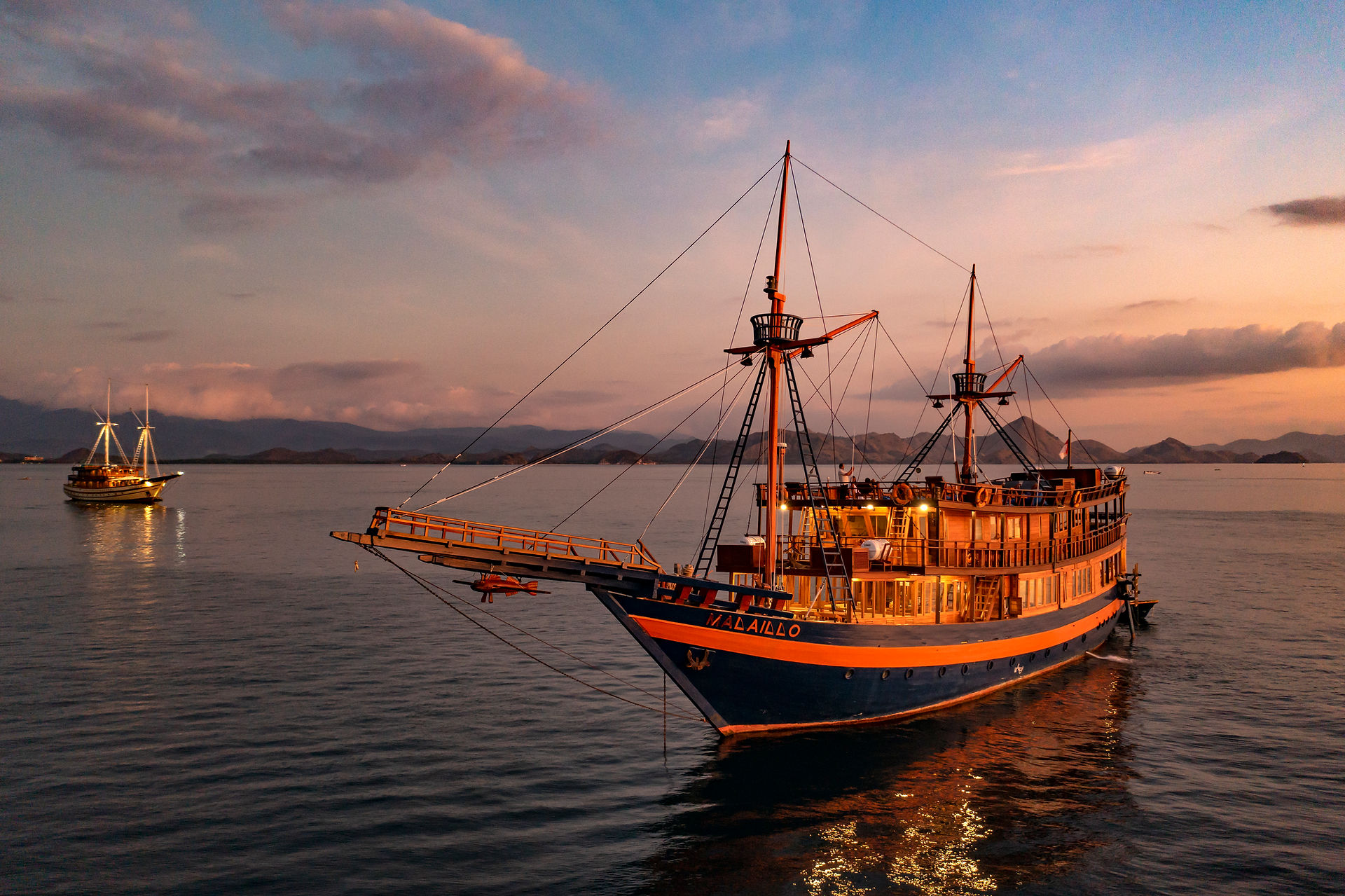
Malaillo Yacth 
Metita Resort 
Lotus Bungalow Villa Almarik Gangga Island Resort Papua Eco Paradise Resort


Comments