
LATest e-bulletin October '26
Look at the endless innovative touring products developed by LAT. From slow tourism to tours away from crowds, from an agile system of modular scheduled departures in different languages to arts, architecture, outdoor, experiential, culinary food and education packages, just to name a few!
All our offers are strictly carbon contribution @LAT Climate Contribution, all emissions being calculated and offset by projects in cooperation with Climate Partners.
In this issue: ❶ Quote of the Month ❷ Nature, or Human Nature? ❸ Fire! ❹ LAT Commitment to the Environment ❺ A Floating Home ❻ 375 at a Time ❼ Five Ways of Being ❽ The Warrior Architect ❾ An Ancient Ship, a New Story ❿ A New Chapter for Emerald Hill ⓫ Almost a Million Trees ⓬ A Ship Full of Stories Returns to Jakarta
The human race is challenged more than ever before to demonstrate our mastery, not over nature but of ourselves.
Rachel Carson
Nature, or Human Nature?
There are mornings when the city seems to have disappeared beneath a thick layer of smog. I presume Singapore is still there, just as my beloved Kuala Lumpur must still be there, although from my kitchen I can barely make out Merdeka Tower.
Driving downtown reveals that nothing has disappeared. Towers, roads, traffic lights, people going to work: everything is exactly where I left it. And yet something essential has vanished. The horizon is gone, and the sun rises as a pale disc behind a curtain that does not belong to the city.
Across the sea, Indonesia is burning. Forests and peat burn, smoke catches the wind and travels across Sumatra, Malaysia and Singapore, effortlessly crossing borders drawn by human beings. And while men set fire to the earth, elsewhere the earth itself opens: volcanoes rumble, ash fills the sky, airports close and villages empty.
There is something almost biblical in this sandwiching of fire above and beneath us, particularly for a species that has spent thousands of years attempting to tame nature and has called that process civilisation.
We cut forests and called them roads, stopped rivers and called the result electricity, carved mountains, drained swamps, moved coastlines and pushed cities where cities had never existed. Now we build monstrous data centres to sustain the invisible world we increasingly inhabit. Somewhere along the way, we confused our ability to alter nature with our ability to control it.
Cause and consequence no longer need to live in the same place. A forest is burned because fire is cheaper than clearing it; the wind changes, and hundreds of kilometres away windows close, children stay indoors, aircraft change routes and cities wake beneath a brown sky.
We touch something here and something moves elsewhere, often long after we have forgotten what set it in motion. Perhaps this is why volcanoes disturb us. We can photograph them from satellites, measure tremors, model magma and send warnings instantly to millions of telephones. Yet when the mountain speaks, we move away. Understanding something does not necessarily mean possessing it.
And yet possession remains our ambition: of nature, distance, climate, biology, information, perhaps eventually ageing itself. We want everything faster, predictable and efficient because uncertainty reminds us that the world remains partly beyond us. And now we are building something that reads what we write, anticipates patterns, creates images and music, writes sentences and increasingly proposes decisions: artificial intelligence. Perhaps the emphasis should fall less upon “artificial” than upon “intelligence”, because we are attempting to reproduce and amplify the very instrument with which we have manipulated the world.
More knowledge, speed and efficiency, until the interval between event and response begins to disappear. Yet that apparently inefficient pause in which humans observe, doubt, compare, remember and reconsider has always been essential to meaningful human activity. There is no reason to fear AI simply because it is new. There is every reason to question what happens when our old, frequently irrational behaviours acquire instruments of unprecedented power. Nature has repeatedly accepted our interventions without agreeing to our rules. Perhaps AI will be no different, although we cannot yet know.
The danger may not be the machine becoming too intelligent, but man remaining exactly as he has always been: brilliant enough to create something extraordinary, impatient enough to use it immediately and arrogant enough to believe that, because he lit the fire, he can decide where it burns.
Eventually the smoke will clear, volcanoes will quieten and the blue sky will return. Very quickly we will believe everything is under control again. And forget how strange the world looked when we could no longer see the horizon.
Fire!
There are two different ways in which fire reaches the Earth. The first originates far deeper than we do. It rises through the Earth’s crust, opens a mountain, lights up the sky and reminds us that beneath our feet there is still a world we have never learned to control.
The second comes from much closer. A spark, a fire lit to clear land, an agricultural practice, an economic decision or simple negligence can become a fire capable of crossing forests and borders.
In recent times, Indonesia has offered us both images. On one side, volcanic activity has drawn attention to one of the archipelago’s defining characteristics. Anak Krakatau has demonstrated its destructive power, while other Indonesian volcanoes have remained significantly active. The images of an erupting volcano are irresistible: a column of ash against the sky, the red glow of lava at night, the sound of a mountain suddenly coming alive. Yet a volcano is not a spectacle. An eruption does not happen to be watched; it has no audience, no program and no purpose other than to do what it has always done. We are the ones who turn a natural event into an image.
For the millions of people living across the archipelago, however, a volcano is not an event but a presence. Mountains are part of the landscape, collective memory, agriculture and religion. Communities have built their lives at the foot of volcanoes that can destroy their land and, at the same time, make it fertile.
Mount Bromo is one of the clearest examples. For the Tenggerese who live on its slopes, it is more than the spectacular landscape seen in visitors’ photographs. Every year, during Yadnya Kasada, the community brings offerings to the crater, preserving elements of ancient traditions that continue to be practised today.
In Bali, the relationship is even more evident. Mount Agung is not simply the island’s highest mountain: it is a spiritual axis around which an entire way of understanding space has developed. On its slopes stands Pura Besakih, one of Bali’s most important Hindu temple complexes, considered sacred for centuries. Its position, like that of many other places across the island, reflects a conception of the world in which human beings, nature and the divine must remain in balance.
And while one part of Indonesia lives alongside fire born from the Earth, another is fighting fire born from our own hands.
The 2026 fire season has been particularly severe. After weeks of heat and unusually dry conditions, vast areas of Indonesia were affected by fires, with CO₂ emissions reaching exceptional levels compared with recent years. Drought, high temperatures and weather conditions favourable to the spread of fire further aggravated the situation. Smoke also reached neighbouring regions, affecting air quality in Indonesia, Malaysia and Singapore.
El Niño made the land drier. It did not, however, start the fires.
To understand why Indonesia burns, we must look beneath the smoke and beneath the ground. Tropical peatlands in Sumatra and Kalimantan contain vast deposits of organic matter accumulated over thousands of years. Naturally saturated with water, peat is relatively resistant to fire. When drained for agriculture and plantations, however, it loses that protection. Fires can then penetrate the ground and continue burning below the surface, making them difficult to detect and extinguish.
The causes are equally complex. Fires can originate from large companies, small farmers, land-management practices, escaped fires and already degraded areas. Research shows that a significant proportion of ignitions occurs outside large industrial concessions, making it impossible to reduce the problem to a single culprit. But this complexity does not make the phenomenon any less human.
The problem is therefore not only the fire, but everything that precedes it: drained land, fragmented forests, altered soils and increasingly dry seasons. When a flame finally appears, it seems like the beginning of the disaster. In reality, it is only the final moment of a transformation that started much earlier.
And on the same land, the two fires meet. The volcano reminds us that there is a nature we cannot control. The fire, on the other hand, reminds us how easily we can convince ourselves that we can.

LAT Commitment to the Environment
The fires that affect Indonesia remind us that protecting the environment cannot be limited to responding to a crisis once it has already begun. At Lotus Asia Tours, our commitment to responsible tourism has always been an ongoing effort to reduce our environmental footprint and contribute to the protection of the ecosystems in which we operate.
As part of our Climate Contribution program, our operations support certified climate projects in collaboration with ClimatePartner. One of these projects is the Rimba Raya Biodiversity Reserve in Indonesian Borneo, a protected area that provides vital habitat for some of the last remaining Bornean orangutans and supports the conservation of one of the region’s most important tropical forest ecosystems. The project combines forest protection and the restoration of degraded areas with initiatives that support local communities, helping to preserve biodiversity, protect carbon-rich forests and reduce the pressures that can lead to deforestation and habitat loss.
For us, this is not simply about offsetting emissions. It is about recognizing that tourism operates within living ecosystems and that our responsibility extends beyond the journey itself. By supporting projects such as Rimba Raya, Lotus Asia Tours aims to contribute, in a measurable and transparent way, to the long-term protection of the forests and wildlife that make Southeast Asia unique.
Learn more about our commitment to sustainability:
A Floating Home
On Sabah’s southeastern coast, Semporna has become one of the main gateways to the islands of Tun Sakaran Marine Park and the waters around Sipadan, Mabul and Kapalai. Tourism, particularly diving and marine experiences, has transformed the local economy in recent years. Thousands of visitors now arrive every day, yet the benefits of this growth have not been evenly shared among the communities that have inhabited these shores for generations.
Among them are the Bajau Laut, a maritime people belonging to the wider Sama-Bajau world, whose history is closely connected to the waters of Borneo, the southern Philippines and eastern Indonesia. For centuries, some communities lived predominantly aboard lepa, traditional wooden boats that served simultaneously as homes, means of transport and family spaces. Others settled in stilt villages along the coast and islands.
Such a way of life required an exceptionally detailed understanding of the marine environment. Navigation, fishing, boatbuilding, reading currents and seabeds, and recognising seasonal patterns were skills passed down through families and communities. They were not simply means of making a living, but an essential part of Bajau Laut identity.
The relationship with the sea has even left traces in the physiology of some Sama-Bajau communities. Research into traditional Bajau freediving practices, for instance, has identified a larger spleen among divers, an adaptation that contributes to the body’s response during prolonged dives. Scientific research has therefore found evidence, even in the human body itself, of a relationship with the marine environment shaped over generations.
Today, however, this culture is undergoing profound change. The gradual settlement of traditionally mobile communities, restrictions on access to marine resources, changes in fishing practices and the lack of legal status for some Bajau Laut have had far-reaching consequences. For those without citizenship or official documentation, access to education, healthcare and formal employment can remain severely limited.
At the same time, traditional skills are becoming increasingly difficult to preserve. Lepa boatbuilding is a long and demanding craft requiring specialised knowledge of wood, construction and navigation, and is now practised by a shrinking number of craftsmen. Traditional weaving faces similar pressures. Bajau women continue to produce tepo mats from pandan leaves, preserving intricate techniques passed down within families.
These objects are more than traditions to be preserved. They carry knowledge and identity, while also offering economic opportunities that could allow local communities to participate more directly in the tourism economy developing around their waters.
This is where cultural heritage and environmental conservation become inseparable. Reef degradation, water pollution and destructive fishing practices threaten the marine ecosystem, but they also affect a culture whose history and livelihoods have been built around that ecosystem. For the Bajau Laut, protecting the sea therefore also means protecting a fundamental part of their heritage
It is in this context that the Igal-Igal Festival was created, taking its name from the Sama-Bajau word for “dance”. Its inaugural edition, held on Mantabuan Island within Tun Sakaran Marine Park, brings together music, dance, oral history, marine knowledge, weaving and traditional boatbuilding. Its purpose is not simply to present Bajau culture to visitors, but to create opportunities for the community itself to take a more direct role in tourism and in the preservation of its heritage.
The festival is therefore only one recent chapter in a much longer story. The real Bajau Laut heritage is not a dance, a boat or a piece of craftsmanship, but the body of knowledge that has allowed a people to build their lives around the sea for generations.
Tourism now offers this culture new opportunities, but it also brings new pressures. As Semporna continues to develop, the challenge is to ensure that the traditions, skills and knowledge that make this culture distinctive remain part of the communities who have carried them forward.
What makes the Bajau Laut story remarkable is not simply that they adapted to life on the sea, but how deeply that adaptation became part of their culture, their skills and their identity. Preserving that heritage means preserving the knowledge and traditions that have allowed a community to build its way of life around its environment for generations.

Five Ways of Being
Step onto a Bugis trading vessel in the 1800s and the crew roster alone would have confused any European sailor watching from the dock. The Bugis, a seafaring people from South Sulawesi, organised both their society and their ships around five genders rather than two. Makkunrai and Oroané map roughly onto what most cultures call women and men. But Calabai, assigned male at birth, lived as women. Calalai, assigned female at birth, lived as men. And Bissu, the rarest of the five, were understood as a synthesis of every gender at once. None of this was new when Europeans first climbed aboard and started writing it down. It was simply the first time anyone outside Sulawesi noticed it held at sea just as firmly as it did on land.
Calabai grew their hair long, wore make-up, and were known on land for running the domestic and ceremonial side of Bugis life; at sea, they crewed the same trading vessels as everyone else, doing the same demanding work. Calalai cut their hair short, wore trousers, and took on physically punishing labour, on land and off it, without anyone treating that as unusual. Bissu sat apart from both. Neither male nor female, often intersex, though the role reached well past biology into something closer to a spiritual office, a bissu might carry flowers in one hand and a keris dagger in the other, and their blessing before a major voyage carried real weight. None of the three were tolerated additions to a crew built around makkunrai and oroané. They were simply part of who got hired.
In 1848, James Brooke sailed into South Sulawesi a few years before crowning himself the first White Rajah of Sarawak, and what he saw on Bugis vessels and in Bugis ports left him unable to stop writing about it. "Some men dress like women, and some women like men," he recorded, "not occasionally, but all their lives, devoting themselves to the occupations and pursuits of their adopted sex." He meant it as an oddity worth remarking on. Had a sailor on his own ship tried the same thing, the consequences would have run from flogging to imprisonment, occasionally worse. The strangeness, on reflection, was never really coming from the Bugis side of the water.
The Bugis were among the most accomplished sailors in the entire Malay Archipelago, and their trading vessels, known as prahu, moved spices, rice, timber, and whole communities across what is now Indonesia, Malaysia, and beyond. Calabai and Calalai crewed those ships and, according to colonial records, held genuine positions of responsibility both aboard and in the port towns those vessels sailed into, season after season. Nobody carved out special room for them within the hierarchy. They were already load-bearing parts of it, which is a rather different thing from being merely tolerated.
Five ways of being, not just two.
The Bugis of South Sulawesi have long recognised five distinct gender identities.
Makkunrai — Cisgender women. Those who are female-bodied and live as women.
Oroané — Cisgender men. Those who are male-bodied and live as men.
Calabai — Male-bodied, living as women. Male-bodied people who live socially as women.
Calalai — Female-bodied, living as men. Female-bodied people who live socially as men.
Bissu — Neither and both, considered sacred. A sacred meta-gender, embodying all genders at once.
Nobody modernised Bugis crews into accepting five genders. The ships had already been built that way, generations before a colonial diarist thought to write it down as a curiosity worth mentioning at all. The system did not survive by luck, and it did not survive by hiding below deck. It survived because, aboard those ships, there had never been anything to survive in the first place.

375 at a Time
You arrive on foot. From the far side of the island, you leave the pier and walk for five minutes through the vegetation. Then the bay opens up in front of you, almost without warning. It's the same Maya Bay you've seen a thousand times in photographs, but it isn't quite the same anymore. No more than 375 people are allowed in at a time. You don't swim, you don't touch the water, you just look, take a photo from the shore, and walk back the way you came.
Looking at it today, so carefully measured, almost timed to the minute, it's hard to imagine that for years it was the exact opposite: a place that turned no one away. After The Beach came out in 2000, Maya Bay became one of the most photographed beaches in the world. Daily visitors climbed past five thousand, boats crowded up to the coral reef, anchors dropped straight onto the seabed, and sunscreen and thousands of bodies in the water did the rest. An ecosystem that had taken decades to form began disappearing in a fraction of that time.
Then, in June 2018, Thailand's Department of National Parks decided to close it, with no set date to reopen. There wasn't even a proper plan, just the understanding that this stretch of sea needed time. And for that time to actually mean something, it had to be time without us.
This is where the story gets interesting. The bay wasn't closed after a tragedy, a collapse, or some sudden disaster. It was closed before nature could send the bill. For almost four years it simply stayed shut, while tourism a few kilometres away carried on as usual.
According to the rangers, the first signs of recovery came sooner than expected. Blacktip reef sharks, gone for years because of engine noise and the constant presence of people in the water, started returning to the shallows within the first few months of the closure. One ranger who has patrolled the area for years said it used to be hard to spot even the small fish near the shore; now, on a good day, you barely need to wade in before you see dozens of them. The coral started growing back too. Crabs, shrimp, and all that small seabed life we usually don't notice slowly began reclaiming the space.
When it reopened in January 2022, it didn't just go back to how it was, it came back different, deliberately more limited. What's most interesting is that these restrictions were never meant as a temporary compromise; they became the new normal. Every year, between August and October, the bay closes again for a few weeks, not because of some new emergency, but because letting the seabed regenerate is now treated as part of the ordinary way the place is managed.
There's something rare about this story. Most of the time, the line between people and nature shifts because nature forces it to: a volcano erupts, a forest burns, an animal abandons a place it can no longer live in. Here, for once, it was people who drew that line themselves, before nature had to draw it for them. They chose to ask less of a place they could have kept exploiting for years, maybe until there was nothing left.
There's no guarantee it will last. Bookings keep climbing, the name is still the name, and the temptation to loosen the restrictions will surface again sooner or later. But for now, whoever makes that five-minute walk from the pier to the beach does it knowing, more or less consciously, that they're a guest in a place where, for once, it was people who chose to stop, before nature made them.
So Many Good Reasons to Work with LAT
Established in 1991. Independently owned and operated. Purely B2B with travel industry partners. Online booking engine with immediate confirmation of hotels, tours and transfers. Long experience in MICE industry. Knowledgeable and efficient reservations personnel. Fully committed to CSR. Direct access to a vast pool of local professional contributors. | Centralised bookings and payments for multi destination tours. 24/7 assistance in 4 different languages. Extensive selection of modular scheduled group departures in different languages. Owner of five boutique island hotels. Owner of one luxury Phinisi Yacht. Climate Contribution for all packages and services on offer. LAT app with updated itineraries and guest info (Apple and Play Stores). |
TATTLER
The Warrior Architect
Can you imagine a successful, revolutionary architect, capable of devising engineering solutions we'd today call cutting-edge, who is also a bloodthirsty warrior and collector of enemy heads? Yet on a remote island off the west coast of Sumatra, that was more or less the same person for centuries. Welcome to Nias, land of avant-garde architecture and unyielding warriors.
For generations, peace on Nias was the exception, not the rule. Villages lived in a state of almost constant conflict with one another: raids, ambushes along the paths, slave-hunting expeditions. Headhunting wasn't violence for its own sake, it was a social pillar: without an enemy's head brought back to the village, a young man couldn't marry or sit on the council of elders. The more heads taken in battle, the higher his status rose. It's also said that the number of wives a warrior could afford grew with it. An entire society, from its hierarchy (king, nobles, commoners, slaves) down to the layout of its villages, was built around the idea that the enemy could show up at any moment.
Out of this permanent tension came the rituals that make Nias famous today. The most iconic is the fahombo, the stone jump: stone walls up to two meters high, cleared barefoot. It was never a game — it was the rite of passage that turned a boy into an adult warrior, ready for combat. Alongside it, the maena, the war dance, performed with ceremonial shields and swords. Yet the spear was the Nias warrior's weapon of choice, so much so that the symbol often depicted on warriors' garments was a triangle, representing that very weapon.
This is where the "warrior" meets the "architect." Nias villages sit on hilltops, laid out along wide central avenues lined with row houses, one right next to the other. Only the king's house, the omo sebua, had "armored" access: a narrow staircase and a trapdoor, designed to be practically impregnable. Had an enemy approached, they would have been attacked with spears from above the trapdoor. Every other house, meanwhile, had a subtler but equally effective feature: connecting doors between one dwelling and the next, letting families flee from house to house without ever crossing the main avenue and exposing themselves to attack. An entire village designed as a chained defence system.
But here comes the twist nobody expects. The very houses built to withstand enemies turned out to be among the most earthquake-resistant structures ever built without a single nail. The support posts aren't driven into the ground but simply rest on large stone slabs: in a tremor, the house can literally "sway" on its base instead of breaking apart, the same principle behind the base isolation used in the most modern earthquake-resistant buildings today, only without years of research. Just pure experience and a will to survive.
The real test came in 2005: a violent earthquake flattened over 80% of the island's modern buildings, while the traditional houses remained almost entirely standing. It's not an isolated anecdote: an academic study specifically focused on the seismic resilience of Nias's traditional houses, analyzing the 2004 and 2005 earthquakes, confirmed that this building system operates on surprisingly advanced engineering principles.
Nias isn't a well-trodden destination yet: the roads aren't perfect, the tourist infrastructure is basic, and that's exactly why the island still holds an authenticity that's become hard to find elsewhere in Southeast Asia. It's exactly the kind of destination worth offering with a carefully tailored itinerary: curated logistics, local guides, the right timing. A pioneering product, in the best sense of the word.

HIGHLIGHTS
An Ancient Ship, a New Story
In Samut Sakhon, a remarkable piece of Thailand’s maritime past is being brought back into focus. The Phanom Surin shipwreck, believed to be around 1,200 years old, is one of the region’s rare archaeological discoveries, offering evidence of the ancient maritime trade that connected Thailand with China, the Middle East and the wider Indian Ocean world. The site is now being developed as a center for archaeological research and cultural tourism, with artefacts from the wreck helping to tell a story that began long before modern borders existed. Thailand’s past was already far more connected to the wider world than we might imagine.
A New Chapter for Emerald Hill
Singapore is preparing to give new life to 37 Emerald Hill, the former site of the Singapore Chinese Girls’ School and one of the historic corners of Orchard Road. The Singapore Tourism Board has launched a tender for its redevelopment, with the three historically significant buildings to be conserved alongside a new hotel concept, lifestyle experiences, dining, retail and cultural spaces. Rather than replacing the past, the project aims to bring it into a new chapter, as part of Singapore’s wider plans to reshape Orchard Road beyond shopping. Located beside the Emerald Hill Conservation Area, the development offers a glimpse of how the city continues to blend heritage with contemporary life, preserving what came before while making room for what comes next.
Almost a Million Trees
In Sabah’s Kinabatangan district, more than 980,000 trees have been planted since 2003 across the 2,632-hectare Sungai Pin Conservation Area. The long-term restoration effort has helped reconnect degraded areas and wildlife habitats in one of Borneo’s richest landscapes, home to orangutans, proboscis monkeys, pangolins and more than 120 bird species. But the number tells only part of the story. Restoration here is a long process of planting, monitoring and maintaining a landscape over time, with three orangutan bridges also helping wildlife move through fragmented forest. In Kinabatangan, conservation is less about returning to the past than giving a changing landscape the chance to become a forest again.
A Ship Full of Stories Returns to Jakarta
After 38 years, a very unusual visitor has returned to Jakarta. MV Doulos Hope, the international floating book exhibition, has docked at Tanjung Priok carrying more than 2,000 books and a crew of around 100 people from 35 countries. The ship’s presence offers something rather different from the usual city experience: a chance to browse books, meet people from around the world and discover a small piece of global culture floating in one of Jakarta’s busiest ports. For a few weeks, the ship will bring a small piece of the wider world to Indonesia, turning a working harbour into a meeting point for stories, ideas and cultures.

Our whole product for free and independent travellers, groups and MICE is based on a Climate Contribution programme. This means that part of the greenhouse gas emissions that will be generated are offset by projects in collaboration with Climate Partner, one of the leading climate protection solution providers for companies.
The arising emissions are being compensated by supporting a third-party certified forest conservation project in Indonesia. This initiative plays a vital role in protecting the habitat of critically endangered orangutans, while also preserving biodiversity and maintaining important carbon sinks. By preventing deforestation and promoting sustainable land use, the project helps reduce CO₂ emissions and supports the long-term resilience of Indonesia’s ecosystems.

For over thirty years, Lotus Asia Tours Group has provided services and assistance to travellers the world over, specialising in the design and implementation of corporate events, activities, incentive tours and motivational travel, targeted at FIT, GIT and MICE markets, in Indonesia, Malaysia, Singapore and Thailand. The group also operates five boutique island hotels in Indonesia, in Lombok, Bali, Sulawesi, Papua and Maluku, as well as a seven-cabin luxury sailing yacht.
We look forward to hearing how we could help make your next trip, tour or event memorable and successful.
Corporate Office
D-5-4 Megan Avenue 1, 189 Jalan Tun Razak, 50400 Kuala Lumpur, Malaysia
T: +60 (0)3 21617075 · E: latgroup@lotusasiatours.com
OUR HOTELS AND OUR LUXURY SAILING YACHT
Click here for more details about our resorts.
Click here for more details about our Phinisi vessel.
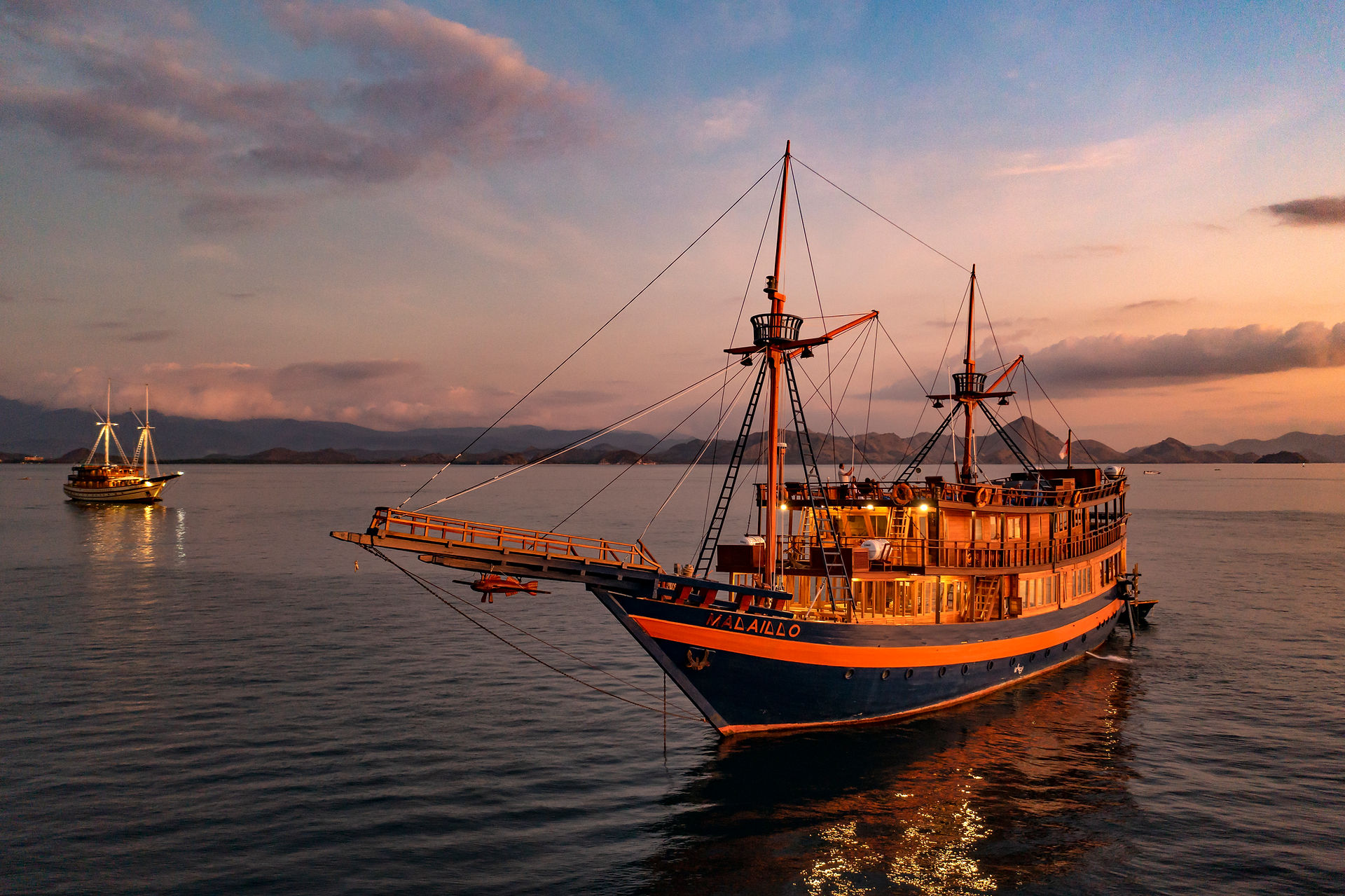
Malaillo Yacth 
Metita Resort 
Lotus Bungalow Villa Almarik Gangga Island Resort Papua Eco Paradise Resort


Comments