-02.png)
LATest e-bulletin August'26
Look at the endless innovative touring products developed by LAT. From slow tourism to tours aways from crowds, from an agile system of modular scheduled departures in different languages to arts, architecture, outdoor, experiential, culinary food and education packages, just to name a few!
All our offers are strictly carbon contribution @ LAT Climate Contribution, all emissions being calculated and offset by projects in cooperation with Climate Partners.
In this issue: ❶ Quote of the month ❷ The Only Technology That Has Always Mattered ❸ The Red Lotus Beyond the Gateway ❹ New Fields to Explore ❺ Indonesia's Social Media Ban ❻ LATest News ❼ Malaysia Makes a Splash at Cannes ❽ Singapore Airlines Flies Madrid ❾ Bali and Phuket Now Closer Than Ever ❿ Koh Samui Awarded Best Island ⓫ LGBT, National Security Threat
In most cases men willingly believe what they wish
Julius Caesar
The Only Technology That Has Always Mattered
Every generation is convinced it is witnessing the greatest technological revolution in history and today that revolution has a name: Artificial Intelligence.
Our industry is understandably fascinated by it. We talk about automation, predictive models, personalization, dynamic pricing, virtual assistants and autonomous workflows. We ask what AI will replace, how quickly it will evolve and how profoundly it will change the way we travel and the way we work. Those are legitimate, important questions. Or perhaps they only feel urgent because everything around us insists that they should.
There is another question that interests me far more, what kind of people will be using these tools? Because technology has never created character. It has always revealed it. A remarkable system placed in the hands of thoughtful, intellectually honest people becomes something extraordinary. The very same system, placed inside an organization that lacks clarity, discipline or courage, simply allows confusion to spread faster. Artificial Intelligence is no exception.
Perhaps that is because the most important technology in our business has never been digital but human.
Travel has never really been about selling hotel rooms, airline seats or itineraries. Those are simply the visible products. What we actually sell is confidence. We sell trust. We sell the reassuring feeling that someone has already thought about tomorrow's problem before it becomes today's emergency.
That invisible work is the real technology of our profession. It is built from experience, judgement, memory, relationships, curiosity and countless conversations. It is refined through mistakes, improved through learning and strengthened every time someone chooses to do something properly instead of merely doing it quickly. Every successful journey rests on thousands of invisible decisions. Most travellers will never know they existed.
And when a whole team learns to make those decisions consistently, giving them coherence, intellectual rigour and operational logic, that technology acquires another name: love.
The love of people who care enough to study a destination before selling it. Who know that every itinerary tells a story. Who understand that every supplier represents years of trust patiently earned. The love that makes someone verify one more detail before sending a proposal, ask one more question before making an assumption or spend another hour solving a problem no client will ever know existed. And this kind of love also has another name: continuity.
Our industry often celebrates brilliant ideas. In reality, great organizations are rarely built by moments of brilliance. They are built by ordinary people repeating extraordinary standards until those standards become habits, and habits eventually become culture. Success is consistency exercised over many years.
Artificial Intelligence can certainly make us faster, but it cannot teach us to care.
It cannot replace the discipline required to keep learning long after experience convinces us that we already know enough. It cannot build trust where trust has never existed. It cannot create a culture that people have not already chosen to live every day.
Behind that apparent simplicity and speed that AI provides lies something entirely different: years spent building supplier relationships, negotiating contracts, inspecting hotels, understanding cultures, forming teams, anticipating risks, preparing alternatives and solving problems before they become visible. And the smoother the experience becomes for the traveller, the easier it is to forget the people who made it possible.
That is why continuity matters more today than ever before. Our teams must remain deeply connected to reality. Destinations are not databases. Partners are not algorithms. Clients are not data points. They are living systems that refuse to fit neatly inside spreadsheets and dashboards.
Intellectual honesty means accepting complexity instead of hiding it. Clarity means having the courage to say, "This is what we know. This is what we do not know. And this is what we still need to understand." That is not a weakness but one of the strongest operational advantages any organization can possess. Teams that see reality clearly make better decisions. Teams that speak honestly solve problems sooner.
Leaders who welcome disagreement before consensus usually build stronger companies than those who reward agreement simply because it is comfortable. Artificial Intelligence will never replace curiosity. It will never replace integrity. It will never replace the quiet satisfaction of keeping one's word. And it will never replace the deeply human capacity to care about a colleague, a supplier or a piece of work simply because it deserves to be done well.
As we embrace this new generation of technologies, perhaps we should remember that our industry has always relied on one technology above all others: character.
It has taken centuries to develop and it still outperforms every machine we have ever built.
The Red Lotus Beyond the Gateway
A recent discussion around the development of secondary tourism gateways in Thailand has brought renewed attention to Udon Thani and, more generally, to the Isan region. Behind this discussion lies a simple but persistent question about one of Thailand’s most overlooked areas: why has Isan, despite its remarkable cultural and natural assets, remained largely outside the country’s main tourism narrative?
For decades, Thailand’s tourism geography has revolved around a familiar constellation of destinations. Bangkok, Phuket, Chiang Mai and the southern islands have become internationally recognisable brands, supported by infrastructure, investment and global visibility. Isan, by contrast, has occupied a different position. Home to nearly a third of Thailand’s population, the region has historically remained on the margins of both economic development and international tourism, despite possessing many of the qualities increasingly sought by modern travellers.
The paradox is striking. At a time when the industry speaks constantly of authenticity, local culture, traditional gastronomy, rural experiences and slower forms of travel, Isan offers these elements in abundance. Its landscapes range from rice fields and Mekong River communities to wetlands such as the Red Lotus Lake near Udon Thani, a place widely known within Thailand but still relatively unfamiliar to most international travellers. Its cultural heritage includes some of the most impressive Khmer monuments in Thailand, including Phanom Rung and Muang Tam, while its traditions, festivals and crafts reflect a distinct Lao-Isan identity that has shaped the region for generations.
Over time, Isan culture has quietly shaped much of what is now recognised as mainstream Thai identity, often absorbed into it without being explicitly acknowledged. Nowhere is this more evident than in food. Many dishes considered emblematic of Thai cuisine, from som tam and larb to grilled chicken and sticky rice, originate in Isan and have gradually become part of everyday culinary culture across the country. Yet while these traditions have travelled widely and gained recognition far beyond Thailand, the region itself remains comparatively invisible to most international visitors.
The reasons behind this are largely structural rather than incidental. Tourism investment tends to follow existing infrastructure, where international airports, hotel capacity and transport connectivity already reduce operational risk. At the same time, global tourism markets reinforce a logic of return on investment that favours established destinations, where demand is already proven and distribution networks are in place. In Thailand, this is further amplified by a highly centralised institutional system, in which tourism strategy, branding and international promotion are largely coordinated from Bangkok. Over time, these dynamics create a path dependency effect, where visibility generates further investment, and lack of initial visibility becomes increasingly difficult to reverse.
Seen from this perspective, recent efforts to strengthen secondary gateways matter less for their immediate outcomes than for what they reveal about Thailand’s evolving tourism geography: a gradual shift towards widening access beyond established hubs. Whether this trajectory will fully materialise remains uncertain. But as tourism demand increasingly moves towards more local and less saturated experiences, Isan is not a destination without appeal, but one that is simply waiting for its moment.

New Fields to Explore
How many times, planning an incentive programme, have we thought: "here we go again, the usual gala dinner and the usual free afternoon"? Something is shifting in the MICE segment, and sport is at the centre of it. No longer a filler between meetings, but a genuine planning lever: the right sport builds connection through competition, recharges energy, or simply gives a group something to talk about long after they've flown home. And our Southeast Asian destinations, it has to be said, offer a genuinely surprising playing field, literally.
Let's start with the most talked-about phenomenon of the last few years: padel. Anyone who's ever had a court nearby knows it well: four people, a racket, five minutes of explanation, and a group of strangers, or colleagues who've only ever met on a video call, end up laughing and competing like old friends. In Bali, several hotels have already bet on it. In Malaysia, the heartbeat is on the east coast of the peninsula, across Desaru Coast, Kuantan and Cherating, with Langkawi joining more recently. In Thailand, Phuket leads the charge, with several luxury resorts already running their own courts. And in Singapore, where tennis and pickleball long fought over court time, some hotels have solved the dilemma by putting all three sports on the same surfaces and letting the group decide. Pickleball, for its part, has no intention of stepping aside: simpler and more inclusive, it's often the better call when not everyone in a large group has ever picked up a racket. Just ask a number of properties in Langkawi and Petaling Jaya, one of which has hosted nothing less than the World Pickleball Championship.
If racket sports are played in square metres, golf is played in hectares. It remains the one true evergreen classic of the MICE segment, the one no group ever turns its nose up at. In Malaysia, Desaru Coast was practically built around a championship course designed by Ernie Els and Vijay Singh. In Thailand, Phuket arguably boasts the deepest golf line-up in the region, with several internationally rated courses, some of which have hosted major professional tournaments. And in Bali, a clifftop links course delivers something people rarely forget.
But competition, however effective, isn't everything: some in a corporate group simply need to slow down. This is where wellness earns its place on the programme. On Koh Samui, some resorts have turned it almost into a science, with retreats built specifically around resilience and communication for leadership teams. Bali's wellness scene, centred on Ubud, leans more toward personal transformation: perfect for a small leadership group, or a single day of pause within a bigger programme. Muay Thai deserves a mention too: some resorts in Phuket offer it with none of the ring's edge, just shared sweat, no punches to actually take.
And then there's everything that needs no court at all, only the destination itself. In Bali, rafting down the Ayung River has become something of a rite of passage for every group passing through Ubud, while e-biking through the UNESCO-listed rice terraces of Jatiluwih delivers scenery that's hard to forget, and just as importantly gives something back to the communities that maintain it. In Thailand and Langkawi, meanwhile, the sea gets in on the action: the Phuket King's Cup Regatta and the Royal Langkawi International Regatta draw more corporate groups every year, chasing a hit of adrenaline out on the water. And in Singapore, dragon boat races along the Marina Bay skyline have earned a fixed place among the most requested team-building formats: there's something about paddling in sync toward the same finish line that no meeting room can ever replicate.
The message, at the end of the day, is simple: sport and wellness are no longer an accessory in the MICE segment, but a genuine planning lever, and probably the part of the programme people will still be talking about months later. If you're thinking about giving your next group something more than another gala dinner, we're ready to build the right mix with you, across our destinations, tailored to any group and any level of competitiveness.
Indonesia's social media ban
Indonesia's decision to introduce age restrictions on social media for users under 16 reflects growing global concerns over online safety, misinformation and digital addiction. However, the experience of many Indonesian families suggests that the role of social media in young people's lives is far more nuanced than the public debate often assumes.
For many children and teenagers, platforms such as YouTube, TikTok and Instagram have evolved into informal learning environments. Parents report that their children use online tutorials to develop practical skills ranging from cooking and language learning to video editing, design and filmmaking. The accessibility of short, engaging content encourages curiosity, creativity and independent problem-solving, complementing rather than replacing traditional education.
At the same time, concerns about harmful content, misinformation and excessive screen time remain valid. Parents interviewed for the study consistently acknowledged the need for supervision and guidance, emphasizing that digital literacy has become as important as digital access itself. Rather than relying solely on restrictions, many believe schools and families should help young people develop the critical thinking needed to navigate online information responsibly.
The discussion reflects a broader challenge facing societies across Southeast Asia. As digital technologies reshape how younger generations learn, communicate and express creativity, policymakers must strike a balance between protecting children and preserving access to valuable educational and creative opportunities.
Indonesia's experience highlights an important lesson for educators, businesses and governments alike: digital platforms are no longer simply entertainment channels. Used responsibly, they have become powerful tools for learning, innovation and the development of skills that will define tomorrow's workforce.
So Many Good Reasons to Work with LAT
Established in 1991. Independently owned and operated. Purely B2B with travel industry partners. Online booking engine with immediate confirmation of hotels, tours and transfers. Long experience in MICE industry. Knowledgeable and efficient reservations personnel. Fully committed to CSR. Direct access to a vast pool of local professional contributors. | Centralised bookings and payments for multi destination tours. 24/7 assistance in 4 different languages. Extensive selection of modular scheduled group departures in different languages. Owner of five boutique island hotels. Owner of one luxury Phinisi Yacht. Climate Contribution for all packages and services on offer. LAT app with updated itineraries and guest info (Apple and Play Stores). |
TATTLER
Malaysia makes a splash at Cannes
Malaysia's growing presence on the international film stage gained further recognition this year as director Ananth Subramaniam returned to the Cannes Film Festival for a second consecutive year. His latest short film, Holy Crowd, was selected for the prestigious Critics' Week, following the success of Bleat! in 2025, which became the first Malaysian short film chosen for the section and went on to win the Queer Palm.
Holy Crowd, an Indonesian-Malaysian-French co-production, explores themes of resurrection and society's response through dark humour, highlighting the increasing importance of international collaboration in Southeast Asian filmmaking. According to Subramaniam, co-productions provide not only greater financing and distribution opportunities but also access to creative talent and expertise that are particularly valuable for Malaysia's still-developing film industry.
Proud of his Tamil heritage, Subramaniam uses cinema to tell stories that reflect Malaysia's cultural diversity and give visibility to communities that are often underrepresented. His upcoming feature film, Pray to the Thunder, will continue this exploration through the story of a young Tamil musician navigating the tension between tradition and modern urban life.
Beyond his personal achievements, Subramaniam represents a broader evolution of Malaysian cinema. Inspired by the international breakthrough of director Amanda Nell Eu and supported by regional creative partnerships, a new generation of filmmakers is demonstrating that authentic local stories can resonate with global audiences. His advice to emerging Asian directors is simple: embrace originality rather than imitate Western trends, because cultural identity is a creative strength, not a limitation.
While acknowledging artificial intelligence as a useful production tool, Subramaniam believes compelling cinema remains rooted in human creativity, perspective and storytelling. His success at Cannes illustrates how authenticity, regional collaboration and cultural confidence are helping place Malaysian filmmaking firmly on the world stage.

HIGHLIGHTS
Singapore Airlines Flies Madrid
From 26 October 2026, Singapore Airlines will resume service to Madrid after a 22-year absence, operating five weekly flights via Barcelona on the Airbus A350-900, its second Spanish destination alongside Barcelona. In parallel, the airline is raising its Singapore-Milan service to daily frequency from 25 October, as part of a broader expansion across its European network heading into the new season.
Bali and Phuket Now Closer Than Ever
TransNusa has launched a new direct scheduled flight connecting Bali and Phuket, bringing together two of Southeast Asia’s most iconic holiday destinations. Operating four times a week on Mondays, Wednesdays, Fridays and Sundays, the new service strengthens Bali’s position as an international aviation hub while making it easier for travellers to combine Indonesia and Thailand in a single journey. The route responds to growing demand for intra-regional travel and opens up new possibilities for leisure, business and multi-destination itineraries across Southeast Asia.
Koh Samui Awarded Best Island
Koh Samui has been named World's Best Island for 2026 in Travel + Leisure's World's Best Awards, ahead of the Maldives, the Galápagos and Bali. Readers cited the island's stylish resorts, dense jungle and waterfalls, alongside a growing reputation as a wellness destination, with Thailand's Ministry of Tourism and Sports pointing to the win as an opportunity to strengthen long-term tourism management rather than simply chase more visitors.
LGBT, National Security Threat
The Indonesian government has officially classified the "spread of LGBTQ culture" as one of the non-military threats to national security under the National Defense General Policy 2025–2029. The decision has sparked widespread concern among human rights organizations, who fear an increase in social stigmatization and discrimination against people belonging to sexual and gender minorities.

Our whole product for free and independent travellers, groups and MICE is based on a Climate Contribution programme. This means that part of the greenhouse gas emissions that will be generated are offset by projects in collaboration with Climate Partner, one of the leading climate protection solution providers for companies.
The arising emissions are being compensated by supporting a third-party certified forest conservation project in Indonesia. This initiative plays a vital role in protecting the habitat of critically endangered orangutans, while also preserving biodiversity and maintaining important carbon sinks. By preventing deforestation and promoting sustainable land use, the project helps reduce CO₂ emissions and supports the long-term resilience of Indonesia’s ecosystems.

For over thirty years, Lotus Asia Tours Group has provided services and assistance to travellers the world over, specialising in the design and implementation of corporate events, activities, incentive tours and motivational travel, targeted at FIT, GIT and MICE markets, in Indonesia, Malaysia, Singapore, and Indochina. The group also operates five boutique island hotels in Indonesia, in Lombok, Bali, Sulawesi, Papua and Maluku, as well as a seven-cabin luxury sailing yacht.
To learn more about our brand please head to our website or contact us directly; we look forward to hearing how we could help make your next trip, tour or event memorable and successful.
Corporate Office
D-5-4 Megan Avenue 1, 189 Jalan Tun Razak, 50400 Kuala Lumpur, Malaysia
T: +60 (0)3 21617075 · E: latgroup@lotusasiatours.com
OUR HOTELS AND OUR LUXURY SAILING YACHT
Click here for more details about our resorts.
Click here for more details about our Phinisi vessel.
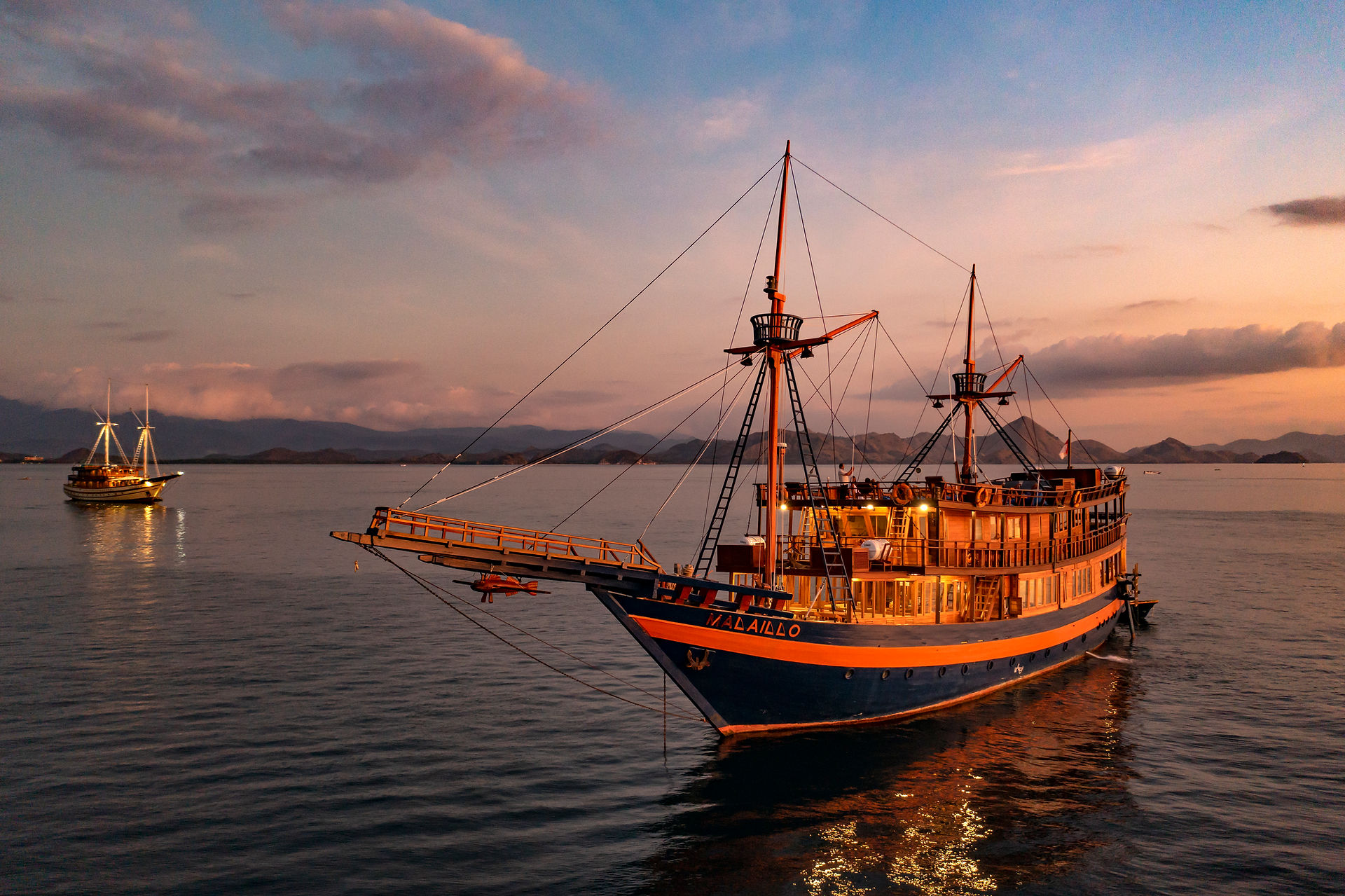
Malaillo Yacth 
Metita Resort 
Lotus Bungalow Villa Almarik Gangga Island Resort Papua Eco Paradise Resort


Comments