
LATest e-bulletin November '26
Look at the endless innovative touring products developed by LAT. From slow tourism to tours away from crowds, from an agile system of modular scheduled departures in different languages to arts, architecture, outdoor, experiential, culinary food and education packages, just to name a few!
All our offers are strictly carbon contribution @LAT Climate Contribution, all emissions being calculated and offset by projects in cooperation with Climate Partners.
LAT THAILAND OFFICES OPENED 01/09/2026
In this issue: ❶ Quote of the Month ❷ Indonesia, the Cracks beneath the Growth ❸ Malaysia, the Global Race ❹ Indonesia, Echoes of the Savanna ❺ Observatory, Thirty Years in Tourism ❻ Malaysia, The Blade with a Soul ❼ Malaysia, Niah Reopens Cave Access ❽ Malaysia, Mummies Travel to Sarawak ❾ Singapore, National Gallery ❿ Malaysia, Lufthansa Returns to KL ⓫ Thailand, Etihad, A380 & Bangkok
You don’t write because you want to say something, you write because you have something to say.
F. Scott Fitzgerald
Indonesia, the Cracks Beneath the Growth
For decades, Indonesia has been regarded as one of Southeast Asia’s most dependable economic success stories. A vast archipelago of nearly 290 million people, rich in natural resources and supported by a growing middle class, it seemed to possess the ingredients for sustained prosperity. While other emerging economies struggled with financial instability, Indonesia offered an image of resilience, fiscal discipline and steady expansion which today is beginning to fracture. The official figures still suggest a growing economy, but beneath them lies a rather different reality. The middle class has contracted by approximately 19% from its peak, household savings among lower-income groups have diminished, and youth unemployment stands at around 17%, one of the highest rates in Asia. Increasing numbers of educated young Indonesians are discovering that qualifications no longer guarantee meaningful employment, while those already employed are reconsidering expenditures once taken for granted.
This is perhaps the most revealing contradiction of Indonesia’s present predicament: an economy can continue growing while a substantial part of its population becomes poorer. The distinction matters particularly in a country where domestic consumption has long been one of the principal engines of economic expansion. When households begin cutting back on travel, entertainment, clothing and other discretionary purchases, the consequences extend far beyond individual lifestyles. Consumption weakens, businesses hesitate to invest, employment opportunities diminish, and the prospect of social mobility begins to fade.
For a generation raised on the expectation that education and hard work would deliver a better future, the disappointment carries consequences that are not merely economic. Indonesia’s difficulties cannot be separated from the increasingly uncertain international environment. Rising energy prices, American tariffs, geopolitical tensions and pressure on emerging market currencies have created challenging conditions across Southeast Asia. Yet external circumstances explain only part of the problem. Under President Prabowo Subianto, questions surrounding economic governance, institutional independence and public spending have added to investor concerns. Ambitious social programmes, including free meals for more than 80 million students, reflect legitimate social priorities but also impose considerable demands on public finances. The programme alone could cost as much as US$30 billion annually. The challenge is not necessarily whether such initiatives are desirable, but whether they are financially sustainable and properly balanced against investment in education, employment creation, infrastructure and productivity.
Meanwhile, changes in economic leadership, concerns over the reliability of official statistics and uncertainty surrounding the management of state assets have weakened the confidence painstakingly established over previous decades. International financial institutions and rating agencies have begun expressing reservations. MSCI, whose indexes influence investment decisions worldwide, has raised concerns about market transparency and the enforcement of regulations against manipulation. Moody and Fitch have also revised Indonesia’s credit outlook from stable to negative.
Financial markets can be notoriously impatient and occasionally excessive in their reactions. Nevertheless, confidence remains an essential economic resource, and once lost, it is rarely restored by political declarations alone. Perhaps the most consequential development is the gradual erosion of Indonesia’s middle class which does considerably more than consume. It sustains entrepreneurship, finances education, supports domestic tourism and provides the social stability upon which long term economic development depends. Its contraction therefore represents more than a statistical adjustment. It signals a weakening of the relationship between economic growth and individual opportunity.
The increasing frequency of public demonstrations suggests that this disconnect is already finding political expression. Indonesia's history provides a particularly sobering reminder of how economic dissatisfaction can evolve into broader social unrest. The Asian financial crisis of 1997–1998 eventually brought an end to President Suharto’s long rule, demonstrating how quickly apparently solid political structures can unravel when economic confidence collapses.
History does not necessarily repeat itself, and contemporary Indonesia is a very different country. Nevertheless, the comparison underlines the importance of institutions capable of responding to economic difficulties before they become political crises. Indonesia importance extends well beyond its national boundaries. As a leading producer of nickel and palm oil, and a major exporter of coal, copper and natural gas, it occupies a strategic position in global supply chains. A prolonged economic deterioration could affect industries ranging from electric vehicles to food production, manufacturing and energy. Its repercussions would inevitably be felt throughout Southeast Asia, even if Indonesia’s financial-market difficulties remain largely contained within its borders.
For the travel industry, the implications are equally relevant. A weakening middle class translates into reduced discretionary spending and potentially softer domestic and outbound tourism demand. At the same time, uncertainty can discourage investment in infrastructure and hospitality, even in destinations with considerable long term potential.
Yet Indonesia retains extraordinary strengths: abundant resources, remarkable cultural diversity, a young population and a geographical position at the heart of one of the world's most dynamic regions, suggesting that its difficulties should not obscure these advantages.
The question is whether economic policy can translate them into opportunities shared more broadly across society. Ultimately, Indonesia’s predicament raises an issue that reaches far beyond economics: what is the value of national prosperity if an increasing proportion of the population can no longer participate in it? Growth remains indispensable, but growth alone is not development. The true measure of an economy is not simply how much wealth it produces, but how effectively that wealth sustains opportunity, confidence and the possibility of a better future.

Malaysia, the Global Race
Across southern Malaysia, landscapes once dominated by palm oil and pineapple plantations are being transformed into vast complexes of steel, concrete and computing power. In Johor, an extraordinary concentration of data centres is emerging, placing Malaysia at the intersection of one of the most consequential technological and geopolitical rivalries of our time.
As artificial intelligence reshapes the global economy, Malaysia has found itself in an unusual and potentially advantageous position. While the United States and China compete for technological supremacy, the country has chosen not to align exclusively with either side, welcoming investment from both.
American technology giants such as Microsoft, Google and Oracle are expanding their presence alongside Chinese companies including ByteDance, Tencent and Alibaba. Their investments are driven by relatively inexpensive land and electricity, strategic proximity to Singapore, and access to submarine communication cables connecting Asia to the wider world.
The scale of development is remarkable. Johor alone has approximately 65 data centre projects operating, under construction or awaiting approval. Existing facilities consume more than two gigawatts of electricity, while projected demand could eventually exceed ten gigawatts, creating one of the world's largest concentrations of computing infrastructure.
The transformation began around 2021, when Singapore's restrictions on new data centres, prompted by concerns over electricity consumption, encouraged developers to look across the border. Chinese companies were among the earliest arrivals, followed by a growing wave of international investors. Yet Malaysia's technological ascent is inseparable from the geopolitical tensions that helped create it.
American export controls introduced in 2022 restrict China's direct access to Nvidia's most advanced artificial intelligence chips. However, Chinese companies can generally access computing capacity hosted in overseas facilities, provided the chips remain outside restricted territories. Malaysia has consequently become an important offshore computing hub, allowing Chinese technology companies to pursue increasingly sophisticated AI development.
This arrangement has attracted scrutiny from Washington, where concerns are growing that overseas computing infrastructure could undermine the effectiveness of export restrictions. Although such remote access is not inherently illegal, additional American regulations could fundamentally alter the industry's prospects. Meanwhile, the rapid expansion is creating challenges much closer to home.
Data centres require enormous quantities of electricity, reliable water supplies for cooling, and extensive supporting infrastructure. Their construction has already raised concerns about environmental degradation, dust pollution, worker safety and the impact on neighbouring communities. The transformation of agricultural land and tropical landscapes into industrial computing complexes is also raising questions about the long-term sustainability of this development model.
Malaysian authorities have responded by tightening approval requirements for new facilities, favouring projects capable of securing independent electricity and water supplies. The measures reflect a growing recognition that technological investment, however substantial, cannot be pursued without considering its environmental and social consequences.
For Malaysia, the opportunity remains exceptional. Its geographical position, infrastructure and diplomatic neutrality have turned it into a meeting point for competing global ambitions, attracting capital and industries that might otherwise have remained concentrated in larger economies.
But the deeper question extends beyond Malaysia itself. As artificial intelligence becomes an increasingly powerful force shaping economies and international relations, the physical resources required to sustain this supposedly intangible technology are becoming impossible to ignore.
Behind the promise of a digital future lie vast stretches of land, immense energy demands, finite natural resources and communities whose lives are being transformed.
Malaysia's challenge will be to ensure that its place in the technological future is defined not merely by the computing power it accommodates, but by the lasting value that development creates.
Indonesia, Echoes of the Savanna
From Conflict to Coexistence in Way Kambas
In the landscapes of Lampung, southern Sumatra, the history of human settlement and the ancient movements of wild elephants have long been intertwined. What began as a struggle over land has gradually become a story of coexistence, revealing how knowledge and patience can transform conflict into a shared responsibility for conservation. In 1963, thousands of families migrated from Bali to Lampung, seeking new opportunities and fertile land on which to build their lives. Yet the territory they settled overlapped with routes that Sumatran elephants had followed for generations, long before fields, villages and boundaries altered the landscape. For the newcomers, crops represented livelihood and security; for the elephants, the same ground remained part of an established habitat and migratory passage.
With little understanding of elephant behaviour or practical means of managing encounters, conflict became increasingly difficult to avoid. Crops were damaged, communities felt threatened, and elephants faced growing pressure from habitat disruption and illegal hunting. What appeared to be a confrontation between people and wildlife was, in many ways, a consequence of two different relationships with the same land. An important change came in 1985 with the establishment of the Pusat Latihan Gajah, the Elephant Training Centre, developed with assistance from experienced elephant handlers from Thailand. The initiative introduced a different approach; one based on learning about elephant behaviour and managing encounters rather than responding to them solely through confrontation.
Today, trained elephants and their mahouts help guide wild elephants away from cultivated areas and towards the forest. Their work illustrates the continuing effort required to reduce conflict at the boundaries of protected landscapes, where the needs of local communities and wildlife do not always fit neatly together.
The surrounding villages have become part of this evolving story. Communities once caught in direct conflict with elephants now have a role in protecting the animals and the landscapes they share, a reminder that conservation cannot be separated from the people who live closest to it. A visit to Way Kambas offers an opportunity to understand this history beyond the boundaries of the national park. From Bandar Lampung, the journey leads through a Balinese settlement, where the story of migration and the changing relationship with elephants provides essential context for the experience ahead. Continuing through farms and changing vegetation towards the park, visitors reach the river and board a traditional wooden boat known as a ketingting. From the water, it may be possible to observe mahouts caring for and bathing elephants, offering a close view of the relationship between the animals and their handlers without losing sight of the care and responsibility that such proximity demands.
Beyond the river, the open savanna offers the possibility of seeing wild elephants moving and grazing across the landscape. Sightings depend on the animals and the conditions of the day, as they should in a place where wildlife follows its own rhythms. Way Kambas is therefore more than an encounter with one of Sumatra’s most remarkable species. It is a place where the history of migration, the consequences of human expansion and the difficult work of conservation meet, and where the possibility of coexistence rests not on the absence of conflict, but on a growing willingness to understand and manage it.

THE OBSERVATOTY - Notes and Observations from LAT Key Personnel
Thirty Years in Tourism
By Fadz Abdan / General Manager Malaysia & Singapore
An Ever Changing Journey of Resilience, Growth and Passion
In 1996, I began what would become a thirty year journey in the tourism industry, starting at a hotel tour desk where my daily responsibilities ranged from selling optional excursions and assisting guests to answering the simplest of questions, including the inevitable “Where is the restroom?” Looking back, those early days still bring a smile to my face, not only because of their simplicity, but because they marked the beginning of a career that would take me much further than I could possibly have imagined.
It was a modest beginning, but I soon discovered that I genuinely enjoyed the industry and wanted to understand more about how it worked beyond the hotel lobby. Eager to broaden my experience, I expressed my interest in joining the office team and, following some encouraging sales results, including the highest sales achieved from a single walk in guest, I was given the opportunity to move into reservations.
I began handling FIT requests before progressing to group travel, eventually finding myself in a Group Department consisting of just two people, together managing as many as one hundred groups a year while preparing countless proposals and quotations. It was demanding work, but it taught me the importance of organisation, attention to detail and the ability to balance the expectations of clients with the practical realities of operating travel programmes.
Then came September 11, 2001, an event that profoundly affected international travel and introduced a level of uncertainty that few of us had experienced before.
With a team of only three people, we found ourselves taking responsibility for virtually every aspect of the business, from contracting and product development to quotations, reservations, operations, inspections and incentive travel. Those were difficult years, yet they also provided an extraordinary opportunity to learn, as necessity required us to become familiar with every part of the operation and understand how each contributed to the success of the whole.
During the same period, I witnessed one of the industry's most significant transformations, as handwritten records, paper files and fax machines gradually gave way to emails, Microsoft Excel and the increasingly digital systems that have since become inseparable from our daily work.
It was also during those years that I achieved an important personal milestone, being promoted to Operations Manager, a position I had aspired to since my very first year in tourism.
The years that followed were anything but uneventful. Financial crises, severe haze, the SARS outbreak, the devastating tsunami of 2004 and numerous other international events repeatedly tested the resilience of our industry, reminding us that tourism, perhaps more than many other businesses, remains extraordinarily sensitive to circumstances far beyond its immediate control.
Each crisis brought different difficulties, but each also reinforced the importance of adaptability, teamwork and the ability to respond to changing conditions without losing sight of the people who depend upon us.
After nearly twenty years in the industry, I was appointed General Manager, with responsibilities extending beyond Malaysia to Indonesia, Myanmar and Singapore. Working within a publicly listed company broadened my professional perspective considerably, bringing greater involvement in human resources, administration, strategic planning and overall business management, and allowing me to appreciate the industry not merely through its operational challenges but through the wider responsibilities of running a business.
Then, just when we might have believed that we had experienced almost every conceivable disruption, COVID-19 arrived.
The pandemic became the greatest challenge of my career, bringing prolonged border closures, uncertainty and the almost complete disappearance of international travel. It also brought, I must admit, a considerable number of white hairs.
When borders finally reopened, the experience was strangely reminiscent of the years following September 11, as we found ourselves rebuilding what had once seemed firmly established. Recovery was neither immediate nor predictable, business returned gradually, recruitment resumed and, together with a dedicated team, we began reconstructing our operations step by step.
That period reminded me that resilience is not simply the ability to survive difficult circumstances, but also the willingness to begin again, to adapt and to find the determination to move forward even when the path ahead remains uncertain.
Thirty years after entering the tourism industry, the challenges have certainly not disappeared, although neither has my passion for the work.
International tourism has recovered significantly since the pandemic, yet the business environment remains unpredictable, with travellers becoming more cautious in their spending, booking closer to departure and responding increasingly quickly to political, economic and international developments.
Forecasting demand and planning ahead have consequently become more complicated, particularly in an industry where events occurring thousands of kilometres away can influence travellers' confidence in destinations that may have little or no direct connection to those events.
At the same time, rising operating costs, changing market expectations and increasingly intense competition require businesses to remain flexible and innovative without compromising the quality of their services or the relationships upon which those services depend.
Despite these challenges, I remain optimistic.
At Lotus Asia Tours, we continue working to reveal the richness of the destinations in which we operate, from their cultural diversity and natural landscapes to the hospitality of their people and the experiences that make travelling through Southeast Asia so rewarding.
The past three decades have taught me that no amount of planning can eliminate uncertainty, but knowledge, experience, cooperation and a willingness to adapt can help us navigate it. They have also reminded me that, behind every successful operation, there are people whose dedication and commitment make the difference, often in ways that remain invisible to the traveller.
As I reflect upon these thirty years, I realise that the industry has given me far more than a career. It has offered continuous opportunities to learn, to grow, to confront difficulties and to work alongside remarkable colleagues, partners and friends, each of whom has contributed in some way to the person and professional I have become.
There have been successes and setbacks, moments of satisfaction and periods of considerable uncertainty, but every experience has left something valuable behind.
Looking back, I am grateful for the opportunities, the lessons and the people who have accompanied me along the way, while looking ahead, I remain as curious about the future of tourism as I was when I first stepped behind that hotel tour desk in 1996. Thirty years later, much has changed, but the passion that brought me into this industry remains very much the same.
So Many Good Reasons to Work with LAT
Established in 1991. Independently owned and operated. Purely B2B with travel industry partners. Online booking engine with immediate confirmation of hotels, tours and transfers. Long experience in MICE industry. Knowledgeable and efficient reservations personnel. Fully committed to CSR. Direct access to a vast pool of local professional contributors. | Centralised bookings and payments for multi destination tours. 24/7 assistance in 4 different languages. Extensive selection of modular scheduled group departures in different languages. Owner of five boutique island hotels. Owner of two luxury Phinisi Yachts. Climate Contribution for all packages and services on offer. LAT app with updated itineraries and guest info (Apple and Play Stores). |
TATTLER
Malaysia, The Blade with a Soul
There are objects that tell us more about a civilisation than monuments, palaces or entire volumes of history, objects that travel across centuries and borders, gathering meanings, legends and beliefs until they become inseparable from the identity of the people who created them. In Southeast Asia, few objects embody this quite as remarkably as the keris. At first glance, it is a dagger, distinguished by its asymmetrical blade, sometimes straight, sometimes unfolding in an elegant succession of waves. Yet across Java, Bali and the wider Malay world, the keris has long been something far more complex than a weapon, carrying within its distinctive form centuries of craftsmanship, spiritual beliefs, political authority and inherited tradition.
Its origins reach deep into the region's past. Some scholars have associated its ancestry with the bronze daggers of the Dong Son culture of mainland Southeast Asia, while early forms resembling the keris appear in the ninth century reliefs of Borobudur and Prambanan in Central Java. Over time, the blade became an emblem of status and identity, an object whose significance extended well beyond the practical purpose for which a dagger might ordinarily be made.
But perhaps the most revealing way to understand the keris is through the stories that have accompanied it. In thirteenth century, Java, in the ancient kingdom of Tumapel, a man of humble origins named Ken Arok commissioned a keris from the celebrated smith Mpu Gandring. Impatient to possess the weapon before its completion, Ken Arok killed its maker and seized the unfinished blade, only to hear the dying craftsman pronounce a curse that would condemn seven lives, including those of his own descendants.
The legend tells how Ken Arok subsequently rose to power, seized the throne and founded the kingdom of Singhasari, before eventually falling victim to the very weapon that had helped secure his fortune. The blade passed from hand to hand, drawing its owners into a succession of betrayals and acts of revenge, as though the curse had become inseparable from the destiny of the dynasty itself. Whether history or legend, the tale reveals something essential about the Javanese understanding of the keris, which was never regarded simply as an instrument in the hands of its owner, but as an object believed to possess a character, a spiritual presence and, sometimes, a will of its own.
Further west, in the Malay world, another keris became the centre of an equally enduring story. At the court of the Malacca Sultanate lived Hang Tuah, the legendary warrior whose loyalty to his ruler would become one of the great themes of Malay literature. During a mission to the Majapahit court in Java, he defeated the warrior Taming Sari and acquired his celebrated keris, a weapon believed to render its bearer invulnerable.
Years later, when Hang Tuah was falsely accused and sentenced to death by the Sultan, the chief minister secretly spared his life. His closest companion, Hang Jebat, believing him dead, rose in rebellion to avenge what he considered a terrible injustice, wielding the very keris that had once belonged to his friend. When Hang Tuah returned to defend the Sultan, the two men found themselves facing one another in a confrontation that would end with Hang Jebat's death.
Was Hang Tuah right to place loyalty to his ruler above friendship, or was Hang Jebat justified in challenging an injustice committed in the name of authority? The question has echoed through generations of Malay storytelling, and at its centre remains the Taming Sari, the blade that bound the two men together before separating them forever.
Today, the Taming Sari is preserved among the royal regalia of Perak in Malaysia, while the keris itself continues to occupy a place in the living traditions of the region.
In 2005, UNESCO proclaimed the Indonesian keris a Masterpiece of the Oral and Intangible Heritage of Humanity. In Malaysia, the Keris Panjang Diraja remains a symbol of royal authority, presented to the King during his installation, while in Java and Bali the keris continues to appear in wedding ceremonies and family traditions, sometimes passing from one generation to another as an inheritance whose value cannot be measured merely in material terms.
For travellers, encountering a keris in the Museum Keris Nusantara in Solo, within the halls of a royal palace or in the workshop of a Javanese craftsman offers an opportunity to discover a dimension of Southeast Asia that is not always immediately visible. For the keris is more than a blade shaped by fire and human hands. It is an object upon which generations have projected their fears, ambitions, loyalties and beliefs, a small piece of metal through which an entire cultural world continues to speak.

HIGHLIGHTS
Malaysia, Niah Reopens Cave Access
Sarawak’s Niah National Park has reopened its Great Cave with a new 600-metre access trail, built after severe floods damaged the original walkway in 2025. Winding through limestone formations and rainforest, the new route offers visitors fresh perspectives of the surrounding landscape, leading back to one of Borneo’s most remarkable archaeological sites, where evidence of human presence dates back at least 50,000 years. At Niah, the scale of the cave is matched by the depth of its human history. The reopening brings visitors back to a place where ancient traces of human life meet the extraordinary natural world of Borneo.
Malaysia, Mummies Travel to Sarawak
Titled Egyptian Mummies: Journey Towards Immortality, the six-month event marks the first time an exhibition of this nature is held in Southeast Asia. Starting in July 2027 at the Borneo Cultures Museum in Kuching, the showcase features 110 ancient Egyptian artifacts on loan from the National Archaeological Museum of Florence, Italy, including two 5,000-year-old mummies of Egyptian aristocrats. The items, which include canopic jars, amulets, and ritual garments, will be displayed in a specially designed gallery setting reflecting ancient Egyptian architecture.
Singapore, National Gallery
What can a brushstroke reveal about a city’s cultural identity? At the National Gallery Singapore, Fan Chang Tien: Rhythm of the Southern Brush invites visitors to discover the legacy of one of Singapore’s most influential ink painters. Featuring more than 80 artworks and archival materials, the exhibition explores an artist whose practice extended beyond painting into calligraphy, poetry and teaching, helping shape Singapore’s Chinese ink art community. Running until 31 January 2027, the exhibition reveals how Fan Chang Tien’s work became part of Singapore’s cultural story, shaped by the meeting of traditions, generations and ideas.
Malaysia, Lufthansa Returns to KL
Germany’s largest airline, Lufthansa, has officially returned to Kuala Lumpur after a 10-year absence! Since 26 October 2026, the new route has been operating five times a week, providing travelers with a direct connection between Kuala Lumpur and Frankfurt, as well as convenient onward connections to destinations across Europe and beyond. This marks Lufthansa’s return to the Malaysian capital after suspending its previous service in 2016.
Thailand, Etihad, A380 & Bangkok
Etihad Airways has launched daily Airbus A380 flights between Abu Dhabi and Bangkok, marking the aircraft’s debut in Thailand. The service introduces The Residence, the world’s only three-room suite in the sky, alongside First Apartments, Business Class lie-flat seats, and an enhanced Economy cabin.

Our whole product for free and independent travellers, groups and MICE is based on a Climate Contribution programme. This means that part of the greenhouse gas emissions that will be generated are offset by projects in collaboration with Climate Partner, one of the leading climate protection solution providers for companies.
The arising emissions are being compensated by supporting a third-party certified forest conservation project in Indonesia. This initiative plays a vital role in protecting the habitat of critically endangered orangutans, while also preserving biodiversity and maintaining important carbon sinks. By preventing deforestation and promoting sustainable land use, the project helps reduce CO₂ emissions and supports the long-term resilience of Indonesia’s ecosystems.

For over thirty years, Lotus Asia Tours Group has provided services and assistance to travellers the world over, specialising in the design and implementation of corporate events, activities, incentive tours and motivational travel, targeted at FIT, GIT and MICE markets, in Indonesia, Malaysia, Singapore and Thailand. The group also operates five boutique island hotels in Indonesia, in Lombok, Bali, Sulawesi, Papua and Maluku, as well as a seven-cabin luxury sailing yacht.
We look forward to hearing how we could help make your next trip, tour or event memorable and successful.
Corporate Office
D-5-4 Megan Avenue 1, 189 Jalan Tun Razak, 50400 Kuala Lumpur, Malaysia
T: +60 (0)3 21617075 · E: [email protected]
OUR HOTELS AND OUR LUXURY SAILING YACHTS
Click here for more details about our resorts.
Click here for more details about our Phinisi vessel Malaillo.
Click here for more details about our Phinisi vessel Malayeka.
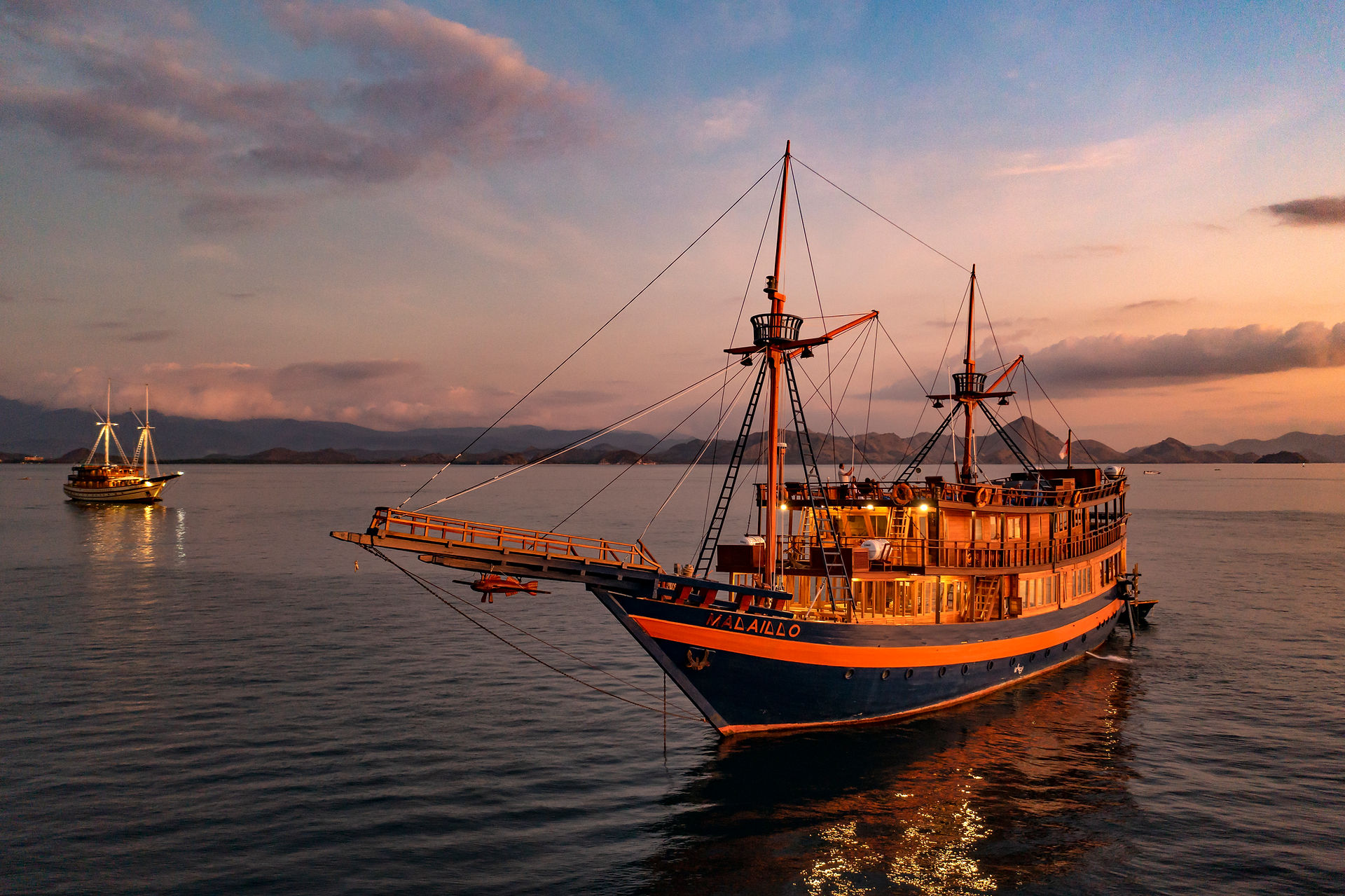
Malaillo Yacth 
Metita Resort 
Lotus Bungalow Villa Almarik Gangga Island Resort Papua Eco Paradise Resort


Comments