-02.png)
LATest e-bulletin January '26
Updated: Jan 20
Look at the endless innovative touring products developed by LAT. From slow tourism to tours aways from crowds, from an agile system of modular scheduled departures in different languages to arts, architecture, outdoor, experiential, culinary food and education packages, just to name a few!
All our offers are strictly carbon contribution @ LAT Climate Contribution, all emissions being calculated and offset by projects in cooperation with Climate Partners.
In this issue: ① Quote of the month ② LAT New Year ③ Ludicrous UNESCO ④ Thailand Tantawan Tented Camp ⑤ Malaysia Spiritual Healing ⑥ Indonesia Cracks Down on Illegal Mining ⑦ Singapore Marina South ⑧ Indonesia goes Biometric ⑨ Malaysia's AI Boom ⑩ Malaysia VMY 2026
You’ll never find a rainbow if you’re looking down.
Charlie Chaplin
LAT New Year
As the new year gets underway, LAT Group is moving into a period of renewed energy and focused development. We have in fact set aside capital to strengthen three key areas: Communication, Technology and Talents.
These investments reflect our commitment to keep evolving how we work, how we communicate, and how we support our partners and clients.
Editorial Board and Content
A new Editorial Board is now in place, bringing together different generations, from Baby Boomers to Millennials and Gen Z. This mix allows us to keep our content informative, culturally grounded, and explorative. This is in line with our tradition, aware that communication today cannot rely on endless scrolling alone, disinformation and unaccultured approach.
You can expect a bulletin that continues to grow, not only in content, but also in format.
Technology and Tour Guiding
We have also set up a Technology Committee to explore and invest in tools for: Customer assistance, Translations and Tour guiding.
Tour guiding, in particular, is becoming a critical issue. Fewer people from younger generations are choosing this profession, and this is already creating challenges, especially in our Spanish and Portuguese speaking, and Italian markets. Finding sustainable solutions here is a priority for us.
Thailand: A Re-direction in Indochina
We are currently exploring the launch of a new LAT operation in Thailand and establishing new partnerships across Vietnam, Laos & Cambodia. While still in its early stages, we expect this operation to be fully active by the second half of the year. The project will be led by Anton, supported by Andrea (Operations) and Giulio (Sales).
We look forward to developing this project with the support and trust of our partners and clients.
New Corporate Video and Website
Our new LAT Group video, which includes updated tutorials, has been completed and is now available on our newly refreshed website. A shorter version focusing only on the essential tutorials can be found in the Agents’ Area (login required via the menu bar).
Team Updates
We are pleased to welcome new and returning colleagues:
Eliana Salvi has rejoined LAT after several years in the diplomatic field. With strong industry experience and fluency in English, Spanish, Malay, and Italian, she will work closely with Fabio to ensure steadiness in the operations and keep our long-term vision on course.
Roberto Foralosso has joined the team to oversee operations in West Indonesia (Java and Sumatra), areas that continue to see growing demand.
Elfira Pratiwi is now responsible for internal auditing and quality control, strengthening our internal processes.
Andrea Dorna, Operation Manager, Thailand.
Finally, we would like to thank all of you, especially those who regularly follow our communications, for your continued attention and trust.
There are growing signs that people across generations are looking again for real connections, real experiences, and meaningful knowledge. This is very much aligned with how we’ve always seen our role and our future.
We look forward to the year ahead and to continuing this journey together.
Happy New Year.

Ludicrous UNESCO
What do Italian cooking, Swiss yodeling, and handmade Japanese paper have in common? In theory, they are living expressions of culture; in practice, they have now been flattened into items on UNESCO’s “intangible heritage” list, a catalogue increasingly treated less as protection and more as promotion. Alongside them sit Egyptian koshary and Iceland’s swimming-pool culture, all swept into a single narrative of global celebration. That some 77 countries competed for inclusion exposes the farce: heritage is no longer safeguarded for continuity, but branded for visibility.
What is ludicrous is not the cultural practices themselves, but the logic governing their elevation. The label has become a seal of commercial desirability, a shorthand for “come consume this.” Centuries of technique, context, and meaning are reduced to marketing hooks, digestible experiences, and Instagram captions. Complexity is inconvenient; nuance does not sell. What survives is the surface, the dish, the sound, the gesture divorced from the social fabric that once gave it weight.
This is where greed and cultural shallowness converge most starkly in the travel industry. Tourism authorities and operators rush to monetize recognition, converting living traditions into itineraries, queues, and “authentic experiences” scheduled between airport transfers. The aim is not understanding but throughput. Culture becomes inventory, and heritage a competitive advantage in a saturated market hungry for novelty but allergic to depth.
In this era, the travel industry does not merely reflect cultural impoverishment but it accelerates it. By rewarding spectacle over substance, it trains both hosts and visitors to perform identity rather than live it. The result is a hollow global stage where everything is celebrated, nothing is truly known, and the very idea of heritage quietly collapses under the weight of its own success.
At LAT, we deliberately choose a different path. We build our work through a sustained and respectful engagement with the cultures we come from and the places in which we operate, valuing depth over display and understanding over imitation. We invest in substance, in context, and in the quiet discipline of learning. If this commitment occasionally asks us to forgo short-term opportunity, we accept it with conviction. Cultural shallowness may attract attention, but it cannot last; only what is rooted, coherent, and deeply understood has the resilience to endure.
P.S. There’s a substantial body of academic work (and some serious long-form journalism) arguing that UNESCO heritage systems—especially World Heritage (tangible sites) and, in a different way, Intangible Cultural Heritage (ICH)—have increasingly been pulled toward political bargaining, lobbying, reputational/economic payoffs (tourism, branding), and procedural “irregularities”.

Thailand Tantawan Tented Camp
Set in the hills of Chiang Rai near the Thai–Myanmar border, Tantawan Tented Camp presents a refined vision of luxury tourism, one that balances nature, comfort, and social responsibility.
The camp elevates the idea of glamping through thoughtful design inspired by Thai cultural aesthetics, combining safari-style accommodation with the comforts of a high-end resort. With just ten spacious tents, including family-friendly two-bedroom options and intimate suites for couples, the experience remains private, immersive, and personal.
Facilities are designed to enhance connection with the surroundings. Guests can relax by a scenic central pool overlooking the mountains, gather at an open-air amphitheatre for movie nights under the stars, or enjoy evenings around a firepit. Activities range from nature walks and cycling through the camp’s grounds to archery, pickleball, and curated excursions into the surrounding region.
Cultural immersion is a central part of the experience. Guests may enjoy private forest picnics prepared with in-house artisanal fare, visit nearby hill-tribe communities, or learn about elephant conservation through guided encounters at a nearby sanctuary. Dining is flexible and ingredient-driven, with menus that range from health-focused options to indulgent meals, including outdoor barbecues and farm-to-table dishes made with locally sourced produce.
Beyond hospitality, Tantawan Tented Camp is deeply rooted in community support. The camp is closely connected to a neighbouring organic farm and residential training centre that provides education, shelter, and long-term support to girls from local hill tribes who are at risk of exploitation. This partnership ensures that philanthropy is not an add-on, but an integral part of the camp’s identity.
Sustainability underpins daily operations. Organic farming, responsible sourcing, reduced waste, and energy-conscious practices are all embedded into the guest experience. Visitors are encouraged to understand the delicate balance between luxury and environmental stewardship, supported by knowledgeable staff who share insights into the local ecosystem.
At Tantawan Tented Camp, luxury is not defined solely by surroundings, but by the positive impact it leaves on people, place, and future generations.

So Many Good Reasons to Work with LAT
Established in 1991. Independently owned and operated. Purely B2B with travel industry partners. Online booking engine with immediate confirmation of hotels, tours and transfers. Long experience in MICE industry. Knowledgeable and efficient reservations personnel Fully committed to CSR. Direct access to a vast pool of local professional contributors. | Centralised bookings and payments for multi destination tours. 24/7 assistance in 4 different languages Extensive selection of modular scheduled group departures in different languages. Owner of five boutique island hotels. Owner of one luxury Phinisi Yacht. Climate Contribution for all packages and services on offer. LAT app with updated itineraries and guest info (Apple and Play Stores). |
TATTLER
Malaysia Spiritual Healing
Far from the polished clinics and wellness centers that define Kuala Lumpur’s modern health care scene, a parallel faith-healing economy is expanding. Operating from suburban shop lots, private homes, and informal temples, self-styled healers now offer spiritual cleansing through social media livestreams, claiming to diagnose and remove unseen afflictions remotely.
Spiritual healing has long been embedded in Malaysian society across ethnic, religious, and income groups. Rather than competing with formal medicine, these practices persist by addressing emotional, psychological, and culturally rooted distress that clinical systems do not always resolve. Many people turn to spiritual healers when symptoms remain unexplained, fear intensifies, or conventional treatment feels insufficient.
What has changed is visibility. Social media (especially short video platforms) has transformed private, referral-based practices into mass-viewed performances. Some healers attract hundreds of thousands of followers, broadcasting live sessions that portray dramatic spiritual confrontations. Critics argue that such content prioritizes spectacle over care, with staged reactions and claims of remote diagnosis that lack grounding in established traditions.
Concerns over ethics and safety have grown alongside this digital expansion. Traditional practitioners warn that theatrical methods, physical aggression, and sensationalism blur the line between healing and entertainment, potentially harming vulnerable individuals. In response, regulated spiritual healing frameworks emphasize restraint, prayer-based practice, and clear boundaries between spiritual, psychological, and medical conditions.
Beyond the online sphere, quieter forms of spiritual care continue. Temples and private centers receive steady visitors seeking relief from anxiety, fatigue, misfortune, or a sense of imbalance, often alongside ongoing medical treatment. For many, these spaces offer reassurance, ritual, and emotional grounding rather than cures.
Across traditions, a consistent pattern emerges: most seekers do not reject modern medicine, but turn to spiritual healing when fear, uncertainty, or emotional strain overwhelms clinical explanations. In an increasingly pressured society, spiritual healing persists not as an alternative system, but as a parallel one, reshaped by technology, contested by tradition, and sustained by the enduring human need for meaning when answers fall short.

HIGHLIGHTS
Indonesia Cracks Down on Illegal Mining
Indonesia is cracking down on illegal mining and forestry operations in parts of Sumatra following deadly floods and landslides that have sparked public anger. Authorities have revoked multiple extraction and production forest permits in affected provinces and imposed a moratorium on new licenses.
The disaster, triggered by extreme weather, was worsened by deforestation, degraded river basins, and blocked waterways linked to illegal resource extraction. Investigations into environmental violations are ongoing, with further enforcement expected as the government strengthens environmental protection and disaster response measures.
Singapore Marina South
Therme Group will develop a S$1 billion large-scale wellbeing destination at Marina South Coastal, after winning a tender by the Singapore Tourism Board. The project marks the group’s first development in Singapore and Southeast Asia.
Planned on a 4-hectare waterfront site near Marina Barrage and Gardens by the Bay, the facility will integrate water, nature, architecture, and technology into a year-round urban wellbeing oasis. It is expected to welcome up to two million visitors annually, about half from overseas.
Designed as a complete wellbeing destination rather than a traditional spa, the project will combine thermal pools, botanical landscapes, arts, and sustainable design, using advanced water recycling, energy-efficient systems, and biophilic architecture to create a cohesive green and blue waterfront environment.
Indonesia goes Biometric
Indonesia has introduced AI-powered biometric corridors at major airports, allowing passengers to clear immigration without stopping or presenting documents. Using facial recognition and pre-travel identity checks completed via a national app, travellers can pass through border control seamlessly and contactless.
First launched in Jakarta and Surabaya, the system was successfully tested during peak travel periods, processing passengers far faster than conventional e-gates. By removing queues and manual checks entirely, the initiative marks a major step in Indonesia’s push toward fully digital, frictionless international travel.
Malaysia's AI Boom
Asia's AI computing cluster landscape is changing. Before 2020, the region's main data centre hubs were Japan and Singapore, but with the emergence of AI data centres, challengers are popping up.
Nowhere is that shift more visible than in Malaysia's Johor state, less than an hour's drive from Singapore's city centre. Just two or three years ago, the area had no supercomputing data centres to speak of. Today, amid sprawling palm forests, Johor's AI data centre build-out rivals what Singapore took more than a decade to construct - and it is continuing to grow.
Malaysia VMY 2026
Malaysia launched its Visit Malaysia 2026 tourism campaign with a New Year’s Eve festival in Kuala Lumpur, drawing large crowds and marking the start of a nationwide push to boost international arrivals.
The year-long campaign will feature more than 300 events across sports, culture, and festivals, supported by airport welcome activities nationwide. VMY2026 focuses on sustainability, cultural heritage, nature-based tourism, digital innovation, and global connectivity.

Our whole product for free and independent travellers, groups and MICE is based on a Climate Contribution programme. This means that part of the greenhouse gas emissions that will be generated are offset by projects in collaboration with Climate Partner, one of the leading climate protection solution providers for companies.
The arising emissions are being compensated by supporting a third-party certified forest conservation project in Indonesia. This initiative plays a vital role in protecting the habitat of critically endangered orangutans, while also preserving biodiversity and maintaining important carbon sinks. By preventing deforestation and promoting sustainable land use, the project helps reduce CO₂ emissions and supports the long-term resilience of Indonesia’s ecosystems.

For over thirty years, Lotus Asia Tours Group has provided services and assistance to travellers the world over, specialising in the design and implementation of corporate events, activities, incentive tours and motivational travel, targeted at FIT, GIT and MICE markets, in Indonesia, Malaysia, Singapore, and Indochina. The group also operates five boutique island hotels in Indonesia, in Lombok, Bali, Sulawesi, Papua and Maluku, as well as a seven-cabin luxury sailing yacht.
To learn more about our brand please head to our website or contact us directly; we look forward to hearing how we could help make your next trip, tour or event memorable and successful.
Corporate Office
D-5-4 Megan Avenue 1, 189 Jalan Tun Razak, 50400 Kuala Lumpur, Malaysia
T: +60 (0)3 21617075 · E: latgroup@lotusasiatours.com
OUR HOTELS AND OUR LUXURY SAILING YACHT
Click here for more details about our resorts.
Click here for more details about our Phinisi vessel.
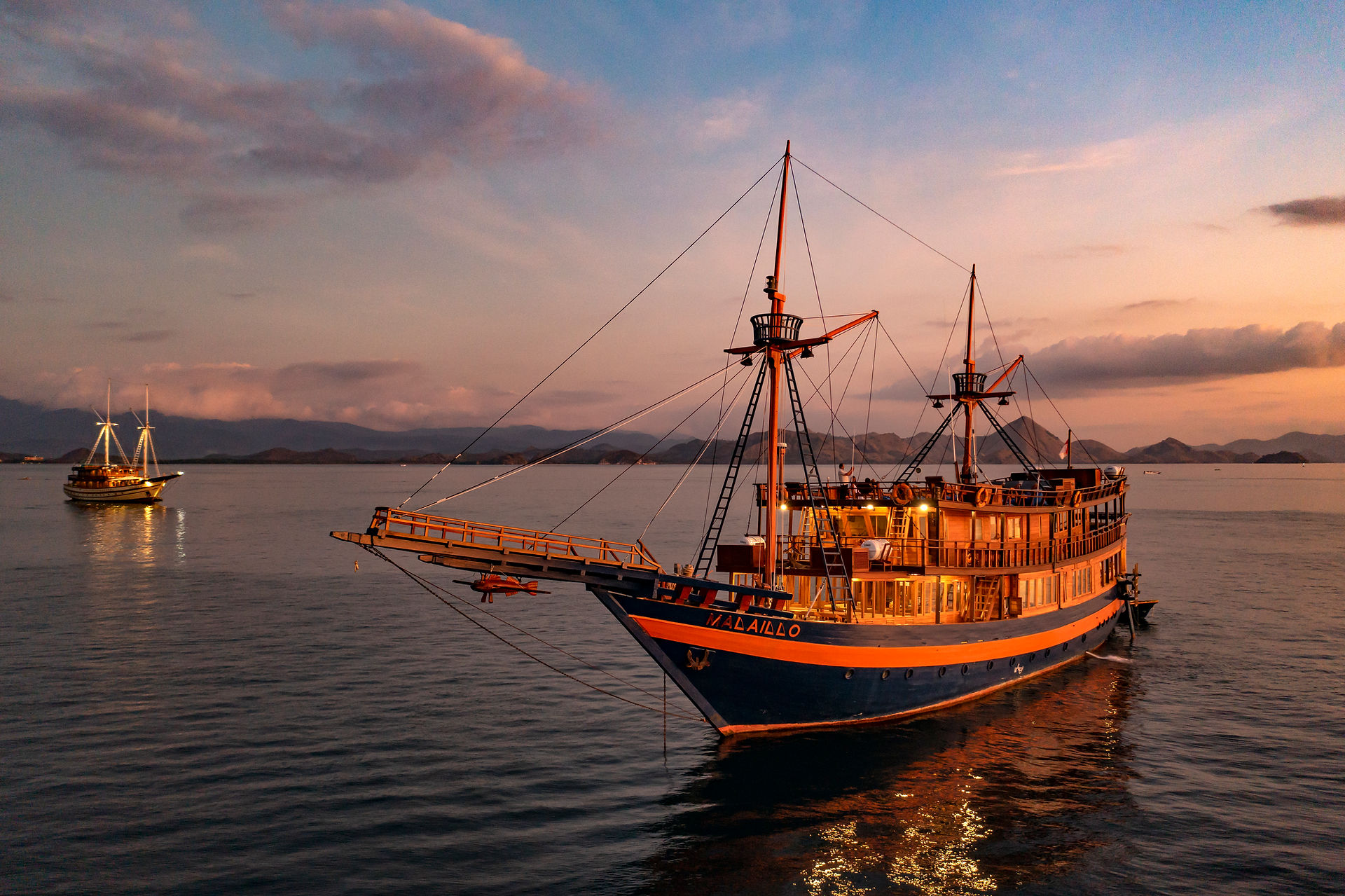
Malaillo Yacth 
Metita Resort 
Lotus Bungalow Villa Almarik Gangga Island Resort Papua Eco Paradise Resort


Comments